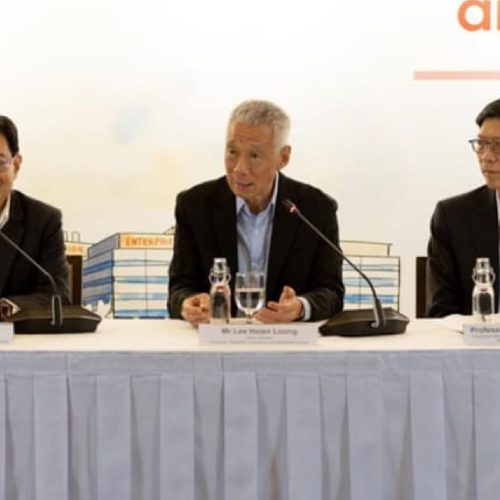
Singapore is strengthening its position as a global innovation hub with a new S$37 billion investment plan dedicated to research, innovation and enterprise over the next five years. Announced by the National Research Foundation, this renewed commitment represents about 1 per cent of the nation’s GDP and reinforces Singapore’s long-term strategy of building a competitive, knowledge-driven economy.
This significant investment aims to accelerate scientific breakthroughs, nurture world-class talent, and boost technological leadership in areas that are critical to economic growth and national resilience.
A Strategic Investment in Singapore’s Future
The new allocation focuses on creating large-scale national programmes known as flagships and grand challenges. These initiatives target priority sectors such as semiconductors, healthy longevity, and emerging deep tech fields. Senior leaders have emphasised that maintaining consistent investment ensures that Singapore remains relevant and competitive amid global technological disruptions.
Senior Minister Lee Hsien Loong highlighted Singapore’s ongoing commitment, noting that the country has consistently invested around 1 per cent of its GDP in research and innovation. This stable foundation provides researchers and institutions with long-term confidence and allows critical scientific work to progress without disruption.
What the S$37 Billion Will Support
Of the S$37 billion, about S$3 billion has been allocated specifically to flagship programmes and grand challenges. These programmes are designed to ensure coordinated research efforts across sectors and produce high-impact outcomes.
Key focus areas include:
Longevity research
Semiconductor innovation
Advanced deep tech with commercialisation potential
AI development and responsible AI frameworks
Strengthening Singapore’s talent ecosystem
The goal is to align research with national priorities, enhance economic competitiveness, and address societal challenges such as ageing and healthcare sustainability.
The Role of Flagships and Grand Challenges
Flagships are mission-driven national programmes that support industries with high-value potential. One confirmed flagship focuses on the semiconductor sector, an industry where Singapore already plays a significant global role. The objective is to upgrade research capacity, attract high-value manufacturing, and support new deep-tech startups that advance chip technology.
Grand challenges, on the other hand, will address national-level issues. One announced challenge focuses on maximising healthy longevity. With one in four Singapore residents expected to be aged 65 or older by 2030, research on ageing, brain health and mobility will become critically important. Under this programme, Singapore will develop new research cohorts, build data infrastructure and create testbeds to evaluate solutions for healthy ageing.
Expanding Global Partnerships
Singapore’s investment may be modest compared to global spending, but NRF chairman Heng Swee Keat emphasised that the country’s strategy hinges on strong international collaboration. To support this effort, Singapore will establish the Singapore-Horizon Europe Complementary Fund. This fund will support local researchers participating in Horizon Europe projects that align with Singapore’s priority areas.
This strategic partnership ensures Singapore maintains access to global research networks and benefits from shared expertise.
Strengthening the Talent Pipeline
Developing future scientific leaders is a major priority in the 2026 to 2030 plan. New funding schemes will be introduced to attract high-potential researchers and encourage entrepreneurial pathways for scientists.
One major initiative is the new postdoctoral award, which will provide qualified candidates with a S$250,000 research grant and up to four years of salary support. This initiative offers young researchers the runway to pursue independent projects while allowing universities to identify future faculty leaders.
Other programmes will give trained researchers opportunities to gain hands-on experience in deep tech startups overseas. For example, the Activate Global-Singapore Fellowship will begin accepting applications in 2026 and will support early-stage innovators working on transformative technologies.
AI as a Transformative Force
Artificial intelligence remains one of the core pillars of Singapore’s new research strategy. The next tranche of funding prioritises building strong foundations in AI research, including areas such as emerging AI models, responsible AI governance and AI applications that accelerate discoveries across other research domains.
By developing local talent and research capabilities, Singapore aims to be a trusted regional leader in AI science and implementation.
Progress from Previous Investments
The results from the past five years demonstrate strong momentum. Business expenditure on research and development rose from S$4.2 billion in 2012 to S$8.1 billion in 2022. Deep tech startups have consistently attracted more than US$1 billion in venture capital each year, accounting for one-fifth of all venture investments in the country.
Venture funding overall grew from US$4.1 billion in 2020 to US$6.1 billion in 2023, a sign of growing investor confidence in Singapore’s innovation ecosystem.
A Long-Term Commitment to Research Excellence
Singapore’s leaders emphasised that research funding must remain stable and long-term. Unlike short-term spending, scientific progress requires years of continuity and confidence. Sudden changes in funding can derail promising projects or waste years of effort.
By maintaining its commitment to invest around 1 per cent of GDP in research and innovation, Singapore ensures that scientific work remains productive, internationally competitive and beneficial to society.
Conclusion
The S$37 billion investment plan marks the beginning of a new chapter in Singapore’s research and innovation journey. With a clear focus on strategic sectors, global partnerships, talent development and AI-driven transformation, Singapore is laying the groundwork for sustainable growth and leadership in the world’s most advanced industries.
This long-term strategy ensures that the country remains a vibrant innovation hub and continues to create value for its people, economy and future generations.