Warning: Cannot modify header information - headers already sent by (output started at /home/aboutsg/public_html/wp-blog-header.php:1) in /home/aboutsg/public_html/wp-includes/feed-rss2.php on line 8
Financial – Latest Singapore News & Updates | About Singapore https://about.sg Wed, 11 Mar 2026 05:27:35 +0000 en-US hourly 1 https://wordpress.org/?v=7.1.3 https://about.sg/wp-content/uploads/2024/08/cropped-Favicon-About-SG-min-32x32.png Financial – Latest Singapore News & Updates | About Singapore https://about.sg 32 32 Best Savings Account Singapore 2026: Digital Banks and Highest Interest Rate Comparison https://about.sg/best-savings-account-singapore-2026/ Wed, 11 Mar 2026 05:27:35 +0000 https://about.sg/?p=2415

Choosing the best savings account Singapore offers in 2026 requires careful comparison of interest rates, fees, minimum balances, and digital banking features. Over the past few years, the financial landscape has evolved rapidly as digital bank Singapore institutions entered the market alongside traditional banks.

Consumers today have more choices than ever before, with some accounts offering tiered interest structures that reward higher balances or specific financial behaviors. This guide compares the highest interest rate Singapore savings accounts, explains risk protection under SDIC, and outlines strategies to maximize returns on your savings.

The Rise of Digital Banks in Singapore
Best Savings Account Singapore 2026: Digital Banks and Highest Interest Rate Comparison

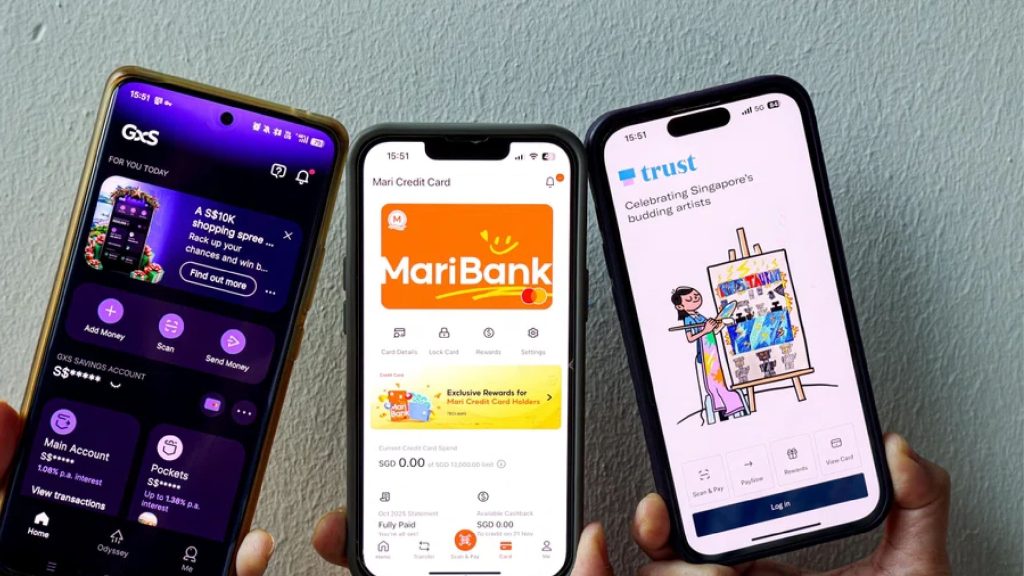
Singapore’s banking industry has expanded beyond traditional financial institutions. In recent years, the Monetary Authority of Singapore granted digital banking licenses to new players, increasing competition and improving savings account interest offerings.

Digital banks operate primarily through mobile apps without physical branches. Their lower operating costs allow them to offer competitive interest rates and fewer service fees.

Key advantages of digital banks include faster account opening, simplified user interfaces, and competitive savings yields. Traditional banks, however, still dominate in areas such as lending services and wealth management.

More information about digital bank regulation can be found on the Monetary Authority of Singapore website at https://www.mas.gov.sg.

Traditional Banks vs Digital Banks

Understanding the differences between traditional and digital bank Singapore services helps consumers choose the right savings account.

Traditional banks typically offer integrated financial services including loans, credit cards, and investment portfolios. Their savings accounts often use tiered interest systems that reward salary crediting, card spending, or bill payments.

Digital banks focus on simplicity and higher base interest rates without complex requirements. Many digital accounts have minimal fees and no minimum balance requirements.

Traditional banks provide stability and broad financial services, while digital banks appeal to tech savvy users who want higher yields and streamlined banking experiences.

Comparison Table: Best Savings Accounts Singapore 2026

Best Savings Account Singapore 2026: Digital Banks and Highest Interest Rate Comparison

The following table provides a simplified comparison of several savings account types available in Singapore.

Bank Type | Interest Rate Range | Minimum Balance | Monthly Fees
Traditional bank high interest account | 1.5 percent to 4.0 percent depending on conditions | S$1,000 to S$3,000 | Usually waived if requirements met
Digital bank savings account | 2.0 percent to 3.5 percent base rate | Often no minimum balance | Typically zero monthly fees
Basic savings account | 0.05 percent to 0.5 percent | S$500 to S$1,000 | Small maintenance fee possible

Interest rates change periodically, so reviewing updated rates from official bank websites is recommended.

For example, you can review current savings account information from major banks such as DBS at https://www.dbs.com.sg/personal/deposits/savings-accounts and OCBC at https://www.ocbc.com/personal-banking/deposits.

Understanding Risk Protection Through SDIC

When choosing the best savings account Singapore residents should also consider deposit protection.

The Singapore Deposit Insurance Corporation protects bank deposits held with participating institutions. Each depositor is insured up to S$75,000 per bank in the event of a bank failure.

This protection covers standard deposit products such as savings accounts and fixed deposits. It does not apply to investment products, structured deposits, or foreign currency investment instruments.

SDIC protection ensures that even if a financial institution encounters problems, depositors have a safety net.

More details can be found on the official SDIC website at https://www.sdic.org.sg.

Strategies to Maximize the Highest Interest Rate Singapore Banks Offer

Many savings accounts advertise high interest rates, but the maximum rate is often achievable only when certain requirements are met.

One common strategy is salary crediting. Several banks offer bonus interest when customers deposit their monthly salary into the account.

Another strategy involves card spending. Some accounts increase interest rates when a minimum monthly credit card spending threshold is reached.

Bill payment services also contribute to interest bonuses. Linking utility or subscription payments to a savings account can unlock additional interest tiers.

Finally, maintaining a higher balance may increase interest rates in tiered accounts. However, it is important to calculate whether the incremental yield justifies holding large amounts in cash rather than investing elsewhere.

For a detailed explanation of savings strategies, refer to financial education resources such as https://www.investopedia.com/articles/pf/09/high-yield-savings-account.asp.

Case Simulations for Savings Growth

To better understand potential returns, consider the following simplified examples.

Example 1: S$10,000 Savings

If S$10,000 is deposited in an account with an average interest rate of 2.5 percent annually, the yearly interest would be approximately S$250.

This level of savings typically benefits from accounts that offer competitive base interest rates without requiring complex conditions.

Example 2: S$50,000 Savings

With S$50,000 in a savings account earning 3 percent annually, total interest could reach around S$1,500 per year.

Some tiered savings accounts provide higher interest rates for balances within specific ranges, making mid level savings particularly advantageous.

Example 3: S$100,000 Savings

At S$100,000 and an average annual interest rate of 3.5 percent, yearly interest income could reach approximately S$3,500.

However, deposit insurance coverage limits should be considered. Since SDIC protects up to S$75,000 per bank, spreading funds across multiple institutions can reduce risk exposure.

Additional Factors to Consider When Choosing a Savings Account

Interest rates are important, but they should not be the only factor when selecting a best savings account Singapore.

Digital banking features can significantly improve user experience. Mobile applications that support instant transfers, spending analysis, and automated savings tools provide additional value.

Customer service quality also matters, especially when dealing with large balances or complex transactions.

Finally, consider integration with other financial services. Some traditional banks provide higher interest rates when customers hold multiple products such as credit cards, insurance policies, or investment accounts.

Tips for Choosing the Best Savings Account Singapore Residents Can Use

Evaluate whether you prefer digital convenience or traditional banking support.

Compare both base interest rates and maximum promotional rates.

Check minimum balance requirements to avoid unnecessary monthly fees.

Confirm that the bank participates in SDIC deposit insurance.

Diversify large deposits across multiple institutions if balances exceed insurance limits.

Conclusion

The search for the best savings account Singapore offers in 2026 has become more complex due to the growing presence of digital bank Singapore institutions and evolving interest rate structures. While traditional banks remain dominant in the financial ecosystem, digital banks have introduced competitive alternatives with attractive interest rates and streamlined mobile banking experiences.

For savers looking to achieve the highest interest rate Singapore banks provide, understanding bonus interest tiers, deposit insurance coverage, and account conditions is essential. By comparing available options carefully and structuring deposits strategically, individuals can significantly increase the return on their savings while maintaining financial security.
]]>
Singapore Inflation and Interest Rate Outlook 2026: What Households and Businesses Need to Know https://about.sg/singapore-inflation-and-interest-rate-outlook-2026/ Fri, 20 Feb 2026 15:46:55 +0000 https://about.sg/?p=2372 Why Financial Conditions in Singapore Are a Hot Topic

Singapore Inflation and Interest Rate Outlook 2026: What Households and Businesses Need to Know

Financial conditions in Singapore have become one of the most discussed topics recently as Singapore inflation pressures, global uncertainty, and interest rate movements continue to shape the economic landscape. Many households are asking how rising costs affect daily expenses, while businesses are closely watching borrowing costs and consumer demand.

Recent commentary from the Monetary Authority of Singapore indicates that Singapore inflation is expected to moderate but remain a key concern as the economy navigates external risks such as global demand fluctuations and geopolitical uncertainty. Analysts note that careful policy calibration remains necessary to maintain price stability while supporting growth.

The Problem: Persistent Cost Pressures on Households and Businesses

Despite signs of easing Singapore inflation compared to previous peaks, Singapore still faces elevated price levels in areas such as housing, services, and food. This creates pressure on household budgets and business margins.

Economists have highlighted that core inflation has been gradually declining but remains sensitive to global supply conditions and domestic wage trends. The government continues to monitor these developments closely as part of its broader economic strategy.

Businesses also face higher financing costs due to tighter global financial conditions. Companies that rely on loans for expansion or working capital must adapt to a higher interest rate environment.

The Agitation: Why the Outlook Still Feels Uncertain

Singapore Inflation and Interest Rate Outlook 2026: What Households and Businesses Need to Know

Even with Singapore inflation expected to ease, uncertainty remains due to external factors. Singapore’s open economy is highly sensitive to global trade cycles, meaning slowdowns in major economies can quickly affect local growth.

Policy discussions under the leadership of Prime Minister Lawrence Wong emphasize balancing fiscal support with long term sustainability, especially as Singapore navigates structural changes such as aging demographics and evolving global supply chains.

Market observers warn that volatility in global interest rates could influence domestic borrowing costs, affecting mortgages, business loans, and investment returns.

The Solution: How MAS Policy Shapes Financial Stability

The Monetary Authority of Singapore manages monetary policy primarily through the exchange rate rather than traditional interest rate targeting. By adjusting the Singapore dollar policy band, MAS aims to control imported inflation and maintain price stability.

Recent policy statements suggest a cautious stance, maintaining a policy path that supports disinflation while remaining responsive to economic risks. This approach helps anchor inflation expectations and provides a predictable environment for financial planning.

For households, this means gradual relief from price pressures over time, while businesses can expect a stable policy framework to guide investment decisions.

What This Means for Households

Singapore Inflation and Interest Rate Outlook 2026: What Households and Businesses Need to Know

Consumers should prepare for a period of Singapore inflation rather than a rapid return to very low price growth. Financial experts recommend focusing on budgeting, building emergency savings, and reviewing loan structures.

Mortgage holders may consider monitoring refinancing opportunities as global rates evolve. Meanwhile, savers can benefit from relatively higher deposit rates compared to previous years.

What This Means for Businesses and Investors

Companies should prioritize cost management and maintain flexibility in financial planning. Diversifying revenue streams and managing cash flow carefully can help mitigate risks associated with slower growth or demand shifts.

Investors are paying close attention to sectors that benefit from stable domestic demand, as well as opportunities arising from Singapore’s position as a regional financial hub.

Outlook for 2026: Gradual Stabilization with Watchful Optimism

Singapore Inflation and Interest Rate Outlook 2026: What Households and Businesses Need to Know

The overall outlook points toward gradual stabilization in Singapore inflation and steady economic growth, supported by prudent policy measures and resilient domestic fundamentals. While risks remain, Singapore’s strong institutions and proactive policymaking provide confidence in its ability to navigate challenges.

As financial conditions evolve, staying informed and adapting strategies will be essential for households, businesses, and investors alike.

Conclusion: Staying Financially Prepared in a Changing Environment

Understanding the Singapore inflation and interest rate outlook is critical for making informed financial decisions in Singapore. By keeping track of policy developments and adjusting plans accordingly, individuals and organizations can navigate uncertainty with greater confidence.

The key takeaway is preparedness. Whether managing personal finances or running a business, proactive planning remains the best defense against economic fluctuations.

]]>
Singapore Dollar Reaches Strongest Level Against US Dollar in Over 11 Years https://about.sg/singapore-dollar-highest-against-us-dollar/ Mon, 26 Jan 2026 14:26:00 +0000 https://about.sg/?p=2287 The Singapore dollar has surged to its strongest level against the US dollar in more than a decade, marking a significant moment for currency markets and investors alike. The local currency climbed to levels last seen in October 2014, reflecting a mix of global uncertainty, weakening sentiment toward the US dollar, and confidence in Singapore’s economic and monetary stability.

This latest rally highlights Singapore’s role as a regional safe haven and underscores how global capital flows continue to favour currencies backed by predictable policies and strong fundamentals.

What Is Driving the Singapore Dollar Higher

Singapore Dollar Reaches Strongest Level Against US Dollar in Over 11 Years

The Singapore dollar strengthened to around 1.2678 against the US dollar, gaining approximately 0.4 per cent in a single session. This move coincided with renewed pressure on the greenback, as traders reacted to speculation surrounding potential US involvement in Japan’s foreign exchange intervention efforts.

Market participants interpreted recent actions by the Federal Reserve Bank of New York as a signal that US authorities may be willing to support Japan in stabilising the yen. This speculation triggered a sharp rally in the Japanese currency, which rose as much as 1.2 per cent against the US dollar, dragging the broader US dollar lower in the process.

As the US dollar weakened, investors shifted funds into alternative currencies perceived as stable and resilient, including the Singapore dollar.

US Dollar Weakness Boosts Asian Currencies

Singapore Dollar Reaches Strongest Level Against US Dollar in Over 11 Years

The rally in the Singapore dollar was not an isolated event. A widely watched index tracking the US dollar against a basket of major currencies fell 0.4 per cent to its lowest level since September, extending a 1.6 per cent decline from the previous week.

Other Asian currencies also benefited from this trend. The Malaysian ringgit strengthened to its highest level since 2018, while the South Korean won rose to a three-week high. These movements reflect a broader regional response to US dollar softness, amplified by expectations of policy coordination among major central banks.

For Singapore, this environment has proven particularly favourable, given its reputation for currency stability and disciplined monetary management.

MAS Policy Stability Supports the Singdollar

Singapore Dollar Reaches Strongest Level Against US Dollar in Over 11 Years

Another key factor supporting the Singapore dollar is the expected policy stance of the Monetary Authority of Singapore. Market expectations suggest that MAS will keep its monetary policy settings unchanged at its upcoming meeting, as core inflation remains steady and within manageable levels.

Unlike most central banks, MAS does not rely on interest rates as its primary policy tool. Instead, it manages monetary conditions by guiding the nominal effective exchange rate of the Singapore dollar, commonly referred to as the S$NEER. This framework allows the currency to move within a controlled policy band, providing flexibility while maintaining overall stability.

The market widely anticipates that MAS will maintain its current S$NEER policy slope and width, reinforcing confidence in the Singapore dollar’s trajectory.

Near-Term Outlook for the Singapore Dollar

Singapore Dollar Reaches Strongest Level Against US Dollar in Over 11 Years

Currency strategists believe the Singapore dollar could continue to strengthen in the near term if US dollar weakness persists. Some analysts project that the exchange rate may test the 1.2600 level against the US dollar, provided there is a sustained breakdown in the greenback.

However, further gains will depend largely on global developments rather than domestic factors alone. Any shift in US monetary policy expectations, renewed strength in the US dollar, or changes in global risk sentiment could influence the pace and extent of the Singdollar’s appreciation.

That said, Singapore’s strong economic fundamentals provide a solid base for the currency even in volatile conditions.

Why Investors Favour Singapore Assets

The strength of the Singapore dollar also reflects sustained investor interest in Singapore’s financial markets. Over recent years, global investors have been drawn to the city-state for its dividend-rich stock market, AAA-rated sovereign bonds, and transparent, predictable governance.

The benchmark Straits Times Index is currently trading at record highs, reinforcing Singapore’s appeal as a stable investment destination. At the same time, the Singapore dollar has gained around 6 per cent against the US dollar over the past 12 months, adding currency appreciation to the list of investor benefits.

In periods of global uncertainty, these characteristics make Singapore an attractive alternative to more volatile markets.

What a Stronger Singapore Dollar Means for Businesses and Consumers

A stronger Singapore dollar has mixed implications for the local economy. For consumers, it can translate into cheaper imports, lower inflationary pressure, and improved purchasing power, especially for overseas travel and imported goods.

For exporters and companies with significant overseas revenue, however, currency strength may compress margins when foreign earnings are converted back into Singapore dollars. Policymakers will be watching these dynamics closely to ensure that currency appreciation remains orderly and aligned with economic fundamentals.

MAS’s exchange-rate-based framework is designed precisely to manage such trade-offs, balancing growth with price stability.

Long-Term Perspective on the Singapore Dollar

While short-term currency movements often grab headlines, the Singapore dollar’s long-term performance has been shaped by consistent policy, fiscal discipline, and economic resilience. Its latest rise to an 11-year high reinforces the perception of Singapore as a safe and reliable financial hub in an increasingly uncertain global environment.

As global markets continue to navigate geopolitical risks and shifting monetary policies, the Singapore dollar is likely to remain a key reference point for investors seeking stability in Asia.

]]>
Silver Dealers in Singapore Face Stock Shortages Amid Price Surge and Buying Frenzy https://about.sg/silver-dealers-in-singapore-stock-shortage/ Mon, 12 Jan 2026 17:04:55 +0000 https://about.sg/?p=2253 Silver has emerged as one of the most talked-about investment assets in recent months, and Singapore is feeling the impact firsthand. As global silver prices soar to historic levels, physical silver bullion is becoming increasingly difficult to secure locally. Silver dealers in Singapore across the island are grappling with shrinking inventories, while investors rush to buy before prices climb even higher.

This surge in demand has created a perfect storm. Limited global supply, strong industrial usage, and heightened investor interest have combined to strain an already tight market. As a result, waitlists for physical silver in Singapore now stretch for weeks or even months.

The Problem: Rising Prices Meet Limited Supply

Silver Dealers in Singapore Face Stock Shortages Amid Price Surge and Buying Frenzy

Silver staged an exceptional rally in 2025, recording gains of more than 160 percent and breaking past the US$80 per ounce mark for the first time. This performance outpaced gold, which also enjoyed a strong year but rose at a comparatively slower pace.

The sharp rise in silver prices has triggered a buying frenzy among investors seeking diversification and protection against economic uncertainty. However, unlike paper assets, physical silver depends on mining output, refining capacity, and logistics. These supply-side constraints have made it difficult for dealers to replenish stock quickly.

Bullion retailers in Singapore report that deliveries that once took one to two weeks are now delayed for months. Some refineries are reportedly hesitant to accept new orders due to overwhelming demand and limited production capacity.

Investor Demand Accelerates the Buying Frenzy

The rally in silver prices has dramatically altered investor behaviour. According to local bullion dealers, sales of gold and silver surged nearly sixfold in late 2025 as customers rushed to lock in purchases.

Interestingly, the profile of buyers is also changing. Where silver investment was once dominated by middle-aged local buyers, dealers are now seeing younger investors in their 20s entering the market. Foreign buyers have also begun turning to smaller, independent dealers after larger retailers ran low on stock.

Despite silver’s reputation for higher volatility compared to gold, many investors are now choosing silver as their preferred precious metal. Dealers estimate that close to 90 percent of current customers opt for silver over gold, attracted by its strong price momentum and perceived upside potential.

Dealers Scramble to Adapt to Tighter Conditions

With physical silver increasingly scarce, Silver dealers in Singapore are being forced to adapt quickly. Many are placing larger bulk orders in anticipation of future shortages, even if delivery timelines remain uncertain.

Some retailers have also expanded their online sales channels to meet growing demand from digital-savvy buyers. Online platforms allow investors to reserve bullion earlier, even if actual delivery is delayed.

At the same time, profit margins on silver products have widened as dealers attempt to manage risk and secure supply. While higher margins may help retailers cope with volatility, they also reflect the intense pressure within the physical silver market.

Industrial Demand Drives Long-Term Pressure

Silver Dealers in Singapore Face Stock Shortages Amid Price Surge and Buying Frenzy

Beyond investors, industrial usage remains the single largest driver of silver demand globally. Approximately 60 percent of the world’s silver consumption comes from industrial sectors, including electronics, electric vehicles, solar panels, and semiconductor manufacturing.

Silver’s high conductivity makes it essential for renewable energy technologies and advanced electronics. As global demand for electric vehicles and clean energy continues to grow, so does the need for silver.

Economists point out that silver mining output has struggled to keep pace with this industrial demand over the past five years. This persistent supply gap has contributed significantly to rising prices and tighter availability in markets like Singapore.

Will Consumers Feel the Impact?

Despite record silver prices, experts believe the immediate impact on everyday consumers in Singapore will remain limited. While manufacturers may eventually pass on higher input costs, silver typically represents only a small portion of the total cost of products such as electric vehicles, batteries, and solar panels.

Industry representatives note that other factors, including manufacturing processes, labour, and shipping costs, play a far larger role in determining final consumer prices. As a result, any price increases linked to silver are expected to be gradual rather than sudden.

However, economists caution that sustained premiums for physical silver in Asia could signal deeper supply constraints. If industrial buyers continue paying higher prices to secure silver, the pressure on global markets may intensify.

Outlook: What Investors and Dealers Are Watching

Looking ahead, analysts are closely monitoring whether physical silver continues to trade at a premium in Asian markets. Such a trend would indicate that industrial demand is still outpacing supply, potentially supporting higher prices.

Some industrial users are already exploring alternatives such as platinum and palladium, both of which also saw strong gains last year. Nevertheless, silver remains difficult to replace in many applications, meaning demand is unlikely to ease anytime soon.

For Singapore investors, the current environment highlights the importance of timing and access. With waitlists growing longer and stock increasingly scarce, physical silver has become not just an investment choice, but a test of patience.

]]>
Singapore CDC Vouchers 2026: How to Claim S$300 and Where to Use It https://about.sg/cdc-vouchers-singapore-2026/ Mon, 05 Jan 2026 16:36:29 +0000 https://about.sg/?p=2241 Rising living costs remain a key concern for many Singaporean households, from groceries to daily necessities. To provide immediate and practical relief, the Singapore government has rolled out the latest tranche of Community Development Council vouchers, allowing every eligible household to claim S$300 starting from January 2. This initiative continues the long-standing effort to support residents while strengthening heartland businesses across the island.

More than just financial assistance, the CDC voucher scheme plays a dual role by easing household expenses and sustaining local merchants, hawkers, and supermarkets that form the backbone of Singapore’s neighbourhood economy.

What Are CDC Vouchers and Who Can Claim Them

Singapore CDC Vouchers 2026: How to Claim S$300 and Where to Use It

CDC vouchers are digital vouchers issued to Singaporean households to help offset everyday expenses. Under the latest tranche, each household is entitled to a total value of S$300.

The vouchers are split into two equal portions. S$150 can be used at participating heartland merchants and hawkers, while the remaining S$150 is designated for use at participating supermarkets. This balanced structure ensures households can manage both cooked food expenses and grocery shopping more effectively.

Any Singaporean household can claim the vouchers, with only one member required to log in using Singpass on the official government website. Once claimed, the vouchers can be shared digitally among household members, making them easy and flexible to use.

How to Claim the S$300 CDC Vouchers

Claiming the CDC vouchers is a simple digital process. A household member can visit the official CDC voucher portal and log in using Singpass. After a successful claim, an official SMS from gov.sg will be sent to the registered mobile number.

This message contains a unique voucher link that can be shared with other household members. There is no need to download additional applications or provide banking details. The vouchers remain valid until December 31, 2026, giving households ample time to plan and spend wisely.

Where CDC Vouchers Can Be Used

Singapore CDC Vouchers 2026: How to Claim S$300 and Where to Use It

The reach of the CDC voucher scheme continues to expand. More than 24,000 heartland merchants and hawkers have joined the programme, an increase compared to the previous year. These include food stalls, coffee shops, provision shops, and neighbourhood services that many residents rely on daily.

In addition, eight major supermarket chains are participating in the scheme. These include Ang Mo Supermarket, Cold Storage, Giant Singapore, HAO Mart, NTUC FairPrice, Prime Supermarket, Sheng Siong, and U Stars Supermarket. This wide coverage ensures households across different estates can conveniently use their vouchers close to home.

Supporting Households Amid Economic Uncertainty

Despite strong economic growth in 2025, Singapore continues to face global challenges such as shifting supply chains, evolving trade policies, rapid technological changes, and the impact of artificial intelligence on jobs and businesses. These uncertainties make short-term support measures like CDC vouchers especially meaningful.

The CDC voucher scheme provides immediate reassurance to households while complementing longer-term economic strategies designed to keep Singapore competitive and resilient. Together, these efforts aim to protect everyday livelihoods while preparing the economy for future transitions.

Impact of CDC Vouchers on Residents and Local Businesses

The effectiveness of the CDC voucher scheme is reflected in its consistently high claim and usage rates. Across previous tranches, claim rates have exceeded 97 percent, demonstrating strong public trust and relevance.

In the most recent tranche alone, more than 1.3 million households successfully claimed their vouchers, with spending exceeding S$650 million. Nearly half of this amount was spent at heartland merchants and hawkers, highlighting the scheme’s direct support for small local businesses.

Overall, spending across past CDC and SG60 voucher tranches has reached nearly S$4 billion, significantly boosting neighbourhood economies since the scheme’s nationwide launch.

Assistance for Seniors and Digitally Less Confident Residents

Recognising that not all residents are equally comfortable with digital processes, additional support measures have been put in place. Digital ambassadors and volunteers will be stationed at selected community centres and digital hubs to guide residents through the claiming process.

These efforts ensure inclusivity, especially for seniors and those less familiar with online platforms, reinforcing the scheme’s goal of leaving no household behind.

Safety Reminders and Donation Option

Residents are advised to remain vigilant against scams. Claiming CDC vouchers does not require sharing bank details, transferring money, or installing apps from unofficial sources. Any suspicious messages should be reported to the relevant authorities immediately.

Households that do not require the vouchers can also choose to give back through the CDC Vouchers Donation Scheme, which allows unused vouchers to be donated to approved charities until January 31, 2026.

Conclusion: More Than Just Vouchers

The S$300 CDC vouchers represent more than short-term financial assistance. They are a practical tool that helps households manage daily costs, supports heartland merchants, and strengthens community resilience. As Singapore navigates economic changes ahead, initiatives like this continue to play a vital role in supporting both people and local businesses.

]]>
DBS Announces Senior Appointments: New IBG and Singapore Country Heads https://about.sg/dbs/ https://about.sg/dbs/#respond Tue, 10 Dec 2024 14:17:11 +0000 https://about.sg/?p=1159 DBS, Singapore’s largest bank, has announced two pivotal leadership changes effective January 1, 2025, as part of its succession planning and commitment to internal talent development. These appointments coincide with Tan Su Shan’s promotion to Group CEO, effective March 28, 2025, succeeding Piyush Gupta upon his retirement.

Key Appointments and Their Significance

1. Han Kwee Juan: New Group Head of Institutional Banking (IBG)

Han Kwee Juan will succeed Tan Su Shan as Group Head of IBG, a critical division handling corporate and institutional banking services globally.

  • Current Role: DBS Singapore Country Head (since 2023).
  • Background: Joined DBS in 2019 after a distinguished 27-year tenure at Citigroup, where he last served as CEO of Citi Singapore.
  • Key Contributions at DBS:
    • Maintained market leadership in deposits, credit cards, and mortgage loans.
    • Strengthened the “one-bank” customer proposition by enhancing synergy between consumer and institutional banking.
    • Served as Acting Chief Information Officer (CIO) from November 2023 to May 2024, bolstering DBS’s technology resiliency.

2. Lim Him Chuan: New Singapore Country Head

Lim Him Chuan will replace Han as Singapore Country Head, overseeing DBS’s domestic operations and strategy.

  • Current Role: Group Head of Strategy, Transformation, Analytics & Research (GSTAR).
  • Background: A 23-year veteran at DBS, Lim has held diverse roles spanning geographies and functions, including business, risk management, and leadership positions.
  • Key Contributions:
    • CEO of DBS Taiwan (2018–2023): Spearheaded the acquisition of Citi Taiwan’s consumer banking business, making DBS the largest foreign bank in Taiwan.
    • As GSTAR Head, drove DBS’s AI and Gen AI initiatives, advancing the bank’s digital transformation agenda.

Leadership Transition and Vision

Piyush Gupta, current Group CEO, emphasized the strategic importance of these appointments:

“The management change reflects DBS’s deep bench strength and our commitment to grooming talent from within. Kwee Juan and Him Chuan are proven leaders who have consistently delivered exceptional value to our stakeholders.”

Both Han and Lim will remain members of DBS’s Group Executive Committee, reporting directly to Gupta.

Why These Appointments Matter

1. Leadership Continuity

These promotions highlight DBS’s strong succession planning and focus on nurturing internal talent for critical leadership roles.

2. Strengthening Institutional and Domestic Operations

With Han’s expertise in institutional banking and Lim’s robust domestic and international experience, DBS aims to sustain its market leadership while driving innovation and operational excellence.

3. Emphasis on Transformation and Technology

Both leaders have played significant roles in shaping DBS’s digital transformation journey, particularly in areas like AI adoption and customer-centric strategies.

What’s Next for DBS?

With Tan Su Shan set to assume the Group CEO role in March 2025, DBS is poised for a seamless leadership transition. Under her guidance, and with Han and Lim taking on their new roles, the bank is well-positioned to navigate emerging challenges and opportunities in the financial sector.

About DBS

Headquartered in Singapore, DBS is one of Asia’s leading banks, renowned for its focus on digital innovation and customer-centric banking solutions. With operations spanning 18 markets, DBS continues to set benchmarks for sustainable and inclusive growth.

Conclusion

The appointments of Han Kwee Juan and Lim Him Chuan mark a significant milestone in DBS’s journey as a global financial leader. These internal promotions underscore the bank’s commitment to fostering talent, ensuring continuity, and delivering enhanced value to all stakeholders.

📅 Key Date to Remember:

  • New Roles Effective: January 1, 2025

Stay tuned as DBS continues to shape the future of banking with visionary leadership and groundbreaking strategies.

]]>
https://about.sg/dbs/feed/ 0
Singapore Homeowners to Benefit from One-Off Property Tax Rebates in 2025 https://about.sg/property-tax-rebates-in-2025/ https://about.sg/property-tax-rebates-in-2025/#respond Sat, 30 Nov 2024 07:16:54 +0000 https://about.sg/?p=1104 Singapore homeowners are set to enjoy a financial reprieve in 2025 as the government introduces a one-off property tax rebate. This initiative is designed to address rising cost-of-living concerns, bringing substantial savings for the vast majority of property owners. Here’s what you need to know about this welcome relief and how it impacts homeowners across the island.

Who Benefits from the 2025 Property Tax Rebate?

The rebates, announced by the Ministry of Finance (MOF) and Inland Revenue Authority of Singapore (IRAS) on November 29, apply to owner-occupied residential properties, including both HDB flats and private residences.

  • Owner-Occupied HDB Flats: A 20% rebate on property tax will be granted.
  • Owner-Occupied Private Residential Properties: A 15% rebate, capped at S$1,000, will be applied.

This means that all HDB homeowners and more than 90% of private property owners will experience lower property tax bills in 2025, thanks to the rebates and adjustments to annual value (AV) thresholds.

Understanding the Changes to Annual Value Bands

Property tax in Singapore is calculated based on a property’s annual value (AV)—the estimated rental income it could fetch in a year. Rising market rents have caused AVs to increase in recent years, but the government has taken steps to ensure tax burdens are fair and manageable.

From January 1, 2025, these changes will take effect:

  • The zero-tax threshold for owner-occupied homes will increase from S$8,000 to S$12,000.
  • All 1- and 2-room HDB flats will remain exempt from property tax.
  • For other HDB flats, property tax will be calculated at a marginal rate of 4% for the portion of AV above S$12,000.

These adjustments mean most homeowners, especially those in smaller flats or lower-value properties, will enjoy reduced property taxes.

Wider Impact on Social Support Schemes

In addition to property tax rebates, the government has revised AV thresholds for social support schemes like the GST Voucher, MediShield Life subsidies, and the Workfare Income Supplement. These thresholds help determine eligibility for various benefits.

Revised AV Tiers in 2025:

  • Tier 1: AV up to S$21,000 (unchanged from 2024).
  • Tier 2: AV between S$21,000 and S$31,000 (expanded from the previous cap of S$25,000).

This revision allows more homeowners, including those living in lower-value private properties, to qualify for benefits such as healthcare subsidies and tax relief.

What This Means for You

Lower Tax Burdens for Most Homeowners

The combination of rebates and revised AV bands means significant savings for homeowners. For instance, those in larger HDB flats or private homes with AVs exceeding S$12,000 can expect lower tax bills due to the 20% or 15% rebate applied to their tax liabilities.

Increased Accessibility to Social Support

The higher AV thresholds ensure that more households, including those in middle-income brackets, are eligible for subsidies across healthcare and other essential services.

Seamless Integration with Existing Schemes

Subsidies under schemes like the Community Health Assist Scheme (CHAS) and MediShield Life will automatically adjust to reflect these changes. Current beneficiaries don’t need to reapply—new subsidy tiers will be implemented seamlessly.

How to Maximize Your Savings in 2025

  1. Understand Your Annual Value:
    Your property’s AV, determined by market rental rates, is the basis for calculating taxes and eligibility for rebates or social schemes. Ensure your property information is up to date with IRAS.
  2. Plan for Adjusted Tax Bills:
    With rebates factored in, your property tax statements will reflect the reduced amounts. Keep an eye out for your 2025 tax bill to ensure accuracy.
  3. Take Advantage of Subsidy Adjustments:
    If you qualify for enhanced healthcare or social support due to the AV changes, look out for notifications from relevant government agencies.
  4. Seek Assistance if Needed:
    If you face financial difficulties despite the rebates and subsidies, you can approach healthcare providers or relevant agencies for further assistance.

Looking Ahead: A More Inclusive Singapore

The 2025 property tax rebate and revised AV thresholds reflect the government’s commitment to easing financial pressures for Singaporean households. These measures ensure that social support schemes remain accessible and fair, benefiting a wide spectrum of homeowners.

As Singapore continues to adapt its policies to address cost-of-living challenges, homeowners can look forward to a more inclusive and supportive environment. Whether it’s through reduced taxes, broader social benefits, or seamless integration of assistance schemes, the government aims to ensure every Singaporean feels secure in their home and future.

Key Takeaways for Homeowners:

  • Rebates of 15%-20% on property taxes in 2025.
  • Revised zero-tax threshold of S$12,000 AV for owner-occupied homes.
  • More households eligible for social support benefits under expanded AV tiers.
  • No action required—rebates and subsidy adjustments will be applied automatically.

Don’t miss the opportunity to enjoy these savings and benefits in 2025! Stay informed, and make the most of the government’s initiatives to support homeowners across Singapore.

]]>
https://about.sg/property-tax-rebates-in-2025/feed/ 0
Civil Servants in Singapore to Receive 1.05-Month Year-End Bonus, with Extra Support for Junior Officers https://about.sg/civil-servants-in-singapore-to-receive-1-05-month-year-end-bonus/ https://about.sg/civil-servants-in-singapore-to-receive-1-05-month-year-end-bonus/#respond Mon, 25 Nov 2024 15:03:00 +0000 https://about.sg/?p=1073 Singapore’s civil servants have much to look forward to as the year comes to a close. The government has announced a 1.05-month year-end bonus, with additional financial support for junior-grade officers. This payout reflects the nation’s strong economic performance in 2024 and underscores its commitment to rewarding the public sector workforce.

With the total annual variable component (AVC) amounting to 1.5 months, junior-grade officers will receive up to S$850 in additional lump-sum payments for the year. This generous package, announced on November 25, highlights Singapore’s progressive approach to supporting its lower-wage workers amidst rising living costs.

Year-End Bonus Details for Civil Servants

The Public Service Division (PSD) revealed that the year-end bonus comprises a 1.05-month AVC, complemented by additional payments for junior-grade officers:

  1. Junior-Grade Officers: Civil servants in grades equivalent to MX15 and MX16, along with those in the Operations Support Scheme (OSS), will receive a one-time lump sum payment of S$600.
  2. Non-Pensionable Annual Allowance (NPAA): All civil servants will also receive the standard 13th-month bonus, which remains a consistent annual practice.

Strong Economic Growth Drives Higher Payouts

The 2024 year-end payout is a testament to Singapore’s economic resilience. The Ministry of Trade and Industry (MTI) recently upgraded the GDP growth forecast to around 3.5%, an improvement from the earlier estimate of 2.0% to 3.0%. This revision reflects the better-than-expected performance of the economy during the first three quarters of the year.

“The year-end AVC payout of 1.05 months reflects Singapore’s strongest economic growth since 2021 and recognizes the contributions of civil servants this year,” said Cham Hui Fong, Deputy Secretary-General of the National Trades Union Congress (NTUC).

Additionally, the labour market remains robust, with the Ministry of Manpower (MOM) reporting continued employment expansion. Unemployment rates and retrenchments have stayed low, despite global uncertainties.

Commitment to Supporting Lower-Wage Workers

In line with the National Wages Council’s (NWC) recommendations for 2024/2025, the government is maintaining a progressive approach to public sector remuneration, ensuring lower-wage workers are not left behind.

The additional one-time payment of S$600 for junior-grade officers and OSS workers aligns with these efforts, providing enhanced support to manage the rising cost of living.

Sanjeev Kumar Tiwari, General Secretary of the Amalgamated Union of Public Employees (AUPE), praised the move:

“This enhanced support will help our officers in the lower-wage income bracket manage the rising cost-of-living. It is vital that civil servants who have contributed to the economy’s success are rewarded accordingly.”

Comparison with Previous Years

The 2024 year-end payouts mark a significant improvement compared to recent years:

  • In 2023, civil servants received a 0.6-month year-end bonus and a 0.3-month mid-year bonus, totaling 0.9 months for the year.
  • In 2024, civil servants received a 0.45-month mid-year bonus, along with up to S$250 in additional one-time payments for junior officers, bringing the total AVC for the year to 1.5 months.

Why This Payout Matters

The generous year-end bonus serves multiple purposes:

  1. Recognizing Civil Servants’ Contributions: As Singapore’s economy continues to grow, rewarding civil servants ensures their efforts are acknowledged.
  2. Encouraging Upskilling: NTUC emphasized the importance of enhancing skills and capabilities through upskilling programs, ensuring civil servants remain competitive and future-ready.
  3. Supporting Economic Recovery: By increasing disposable income, these bonuses also contribute to domestic consumption and the broader economy.

Looking Ahead: Continuous Progress for Civil Servants

The government’s decision reflects its commitment to balancing economic realities with fair compensation for public sector employees. The emphasis on progressive wage policies also aligns with Singapore’s broader efforts to address income inequality and uplift lower-wage workers.

As the economy continues to show signs of improvement, public sector workers can expect ongoing dialogue between the government and unions to ensure remuneration remains competitive and aligned with economic growth.

]]>
https://about.sg/civil-servants-in-singapore-to-receive-1-05-month-year-end-bonus/feed/ 0
Seatrium Shares Surge Amid Positive Developments and Recent Challenges https://about.sg/seatrium-shares-surge-amid-positive-developments-and-recent-challenges/ https://about.sg/seatrium-shares-surge-amid-positive-developments-and-recent-challenges/#respond Sat, 05 Oct 2024 11:48:44 +0000 https://about.sg/?p=1053 On October 4, 2023, shares in Seatrium Limited experienced a remarkable surge of 10.73%, reaching $1.96 by 11:58 AM, just before the midday trading break. This significant increase follows the company’s recent announcement of its profitable half-year results, marking a notable shift in its financial performance. Despite this positive momentum, Seatrium continues to navigate challenges stemming from its past, particularly related to a long-standing bribery case in Brazil. This article explores the factors contributing to Seatrium’s stock surge and the context of its ongoing challenges.

The Surge in Seatrium Shares

Strong Financial Results

Seatrium’s recent financial performance has played a crucial role in boosting investor confidence. The company reported earnings of $36 million for the first half of FY2024, ending June 30. This marked the first set of profitable half-year results since its combination with Keppel Offshore & Marine (O&M) in 2023. The positive financial indicators signal a potential turnaround for the company, leading to increased investor interest and buy orders for shares.

Trading Activity

The surge in share price was characterized by significant trading activity. A notable buy order for just under 4.7 million shares was filled at $1.80 at 11:17 AM, followed by another order for approximately 1.5 million shares at $1.81 shortly thereafter. Such trading volumes indicate strong investor demand and confidence in the company’s future prospects.

No Trading Halt Called

Despite the substantial increase in share price, Seatrium did not call for a trading halt, which is often a common practice in response to significant stock movements. This decision suggests that the company remains confident in its current standing and is actively managing its communications with investors and the market.

Addressing Past Challenges

Operation Car Wash Investigation

While the recent financial results and stock performance are encouraging, Seatrium is still dealing with the ramifications of its past actions. The company has been associated with a long-running bribery investigation in Brazil, known as Operation Car Wash. This investigation, which began in 2014, has brought to light several potential offenses related to the company’s former entity, Sembcorp Marine, and its officers, which allegedly contravened the Securities and Futures Act.

Deferred Prosecution Agreement

In March 2023, Seatrium announced that the Attorney-General’s Chambers had agreed to a deferred prosecution agreement, involving a financial penalty of US$110 million. This agreement followed probes conducted by the Corrupt Practices Investigation Bureau (CPIB), further complicating the company’s operational landscape. However, despite these challenges, Seatrium is taking steps to address its past and move forward positively.

Recent Contract Cancellation

Impact of Empire Wind Project Cancellation

In a contrasting development, Seatrium faced setbacks with the cancellation of a $250 million wind farm contract awarded by Empire Offshore Wind, a joint venture between Equinor and BP. The cancellation, attributed to “significant macroeconomic conditions” impacting the Empire Wind 2 project, has raised concerns about the company’s future in the renewable energy sector.

Limited Financial Impact

Despite the setback, Seatrium emphasized that the cancellation of the Empire Wind 2 contract is not expected to have a material impact on the company’s earnings per share or net tangible asset per share for the current financial year. The company stated that the contract value was relatively small, accounting for less than 1.5% of its order book. Additionally, ongoing projects, including the Empire Wind 1 platform, remain unaffected, providing some reassurance to investors.

Analyst Perspectives

DBS Group Research has reiterated its positive outlook on Seatrium, maintaining a “buy” recommendation with a target price of 18 cents. The research house noted that while the recent contract cancellation was unfortunate, the long-term prospects for the offshore wind sector remain constructive, supporting Seatrium’s ongoing projects and turnaround narrative.

Conclusion

Seatrium Limited’s stock surge on October 4 reflects a combination of strong financial performance and resilient investor confidence. The company’s ability to report profitable half-year results is a promising indicator of its turnaround efforts following the merger with Keppel Offshore & Marine. However, challenges related to past allegations of bribery and the recent cancellation of a significant contract must be navigated carefully.

As Seatrium moves forward, its focus will likely be on capitalizing on positive momentum while addressing the implications of its past. Investors and market analysts will be closely monitoring the company’s performance in the coming months, particularly regarding its ongoing projects and the broader offshore and renewable energy sectors. With strategic management and continued focus on operational integrity, Seatrium aims to solidify its position in the market and enhance shareholder value.

]]>
https://about.sg/seatrium-shares-surge-amid-positive-developments-and-recent-challenges/feed/ 0
Tan Su Shan Will Be the First DBS’s Female CEO https://about.sg/tan-su-shan-will-be-the-first-dbss-female-ceo/ https://about.sg/tan-su-shan-will-be-the-first-dbss-female-ceo/#respond Thu, 08 Aug 2024 02:51:52 +0000 https://about.sg/?p=963 Ms Tan Su Shan, as of now head of DBS’ organization keeping money gathered, will take over the beat work when Mr Piyush Gupta resigns in Walk 2025.

Ms Tan, 56, is now head of the DBS organization keeping money gathered. She will take the best work when Mr Piyush Gupta, 64, resigns in Walk 2025 after 15 years as CEO.

Ms Tan brings “solid credentials” to her modern part, DBS said on Wednesday (Aug 7) because it reported the administration alter.

“Her arrangement is the perfection of a decade-long progression handle,” the bank included, noticing that the Singaporean was regarded as the most grounded among all inside and outside candidates.

At a media briefing, Mr. Gupta depicted his successor as somebody with “phenomenal trade intuition” and “extraordinary client abilities”. He said she gets along well with group individuals and is outfitted with mastery in operations extending from customer-keeping money and riches administration to innovation.

“I have each certainty that she has what it takes to lead this institution to more noteworthy statures in days to come,” he included.

Tan Su Shan’s Banking Career

Ms Tan graduated with an Ace of Expressions from Oxford College where she considered legislative issues, reasoning, and financial matters.

She spent more than a decade at Morgan Stanley and Citi sometime recently joining DBS in 2010, working on building the bank’s rich administration commerce within the, to begin with three a long time

She in this way included buyers keeping money in her portfolio and has been credited with growing the bank’s shopper and riches commerce.

Beneath her charge, DBS’ customer and riches commerce developed relentlessly to account for almost a third of pre-tax benefit by the time she moved to her current part in 2019, according to a Bloomberg report.

Ms Tan presently heads the organization managing an account gather, another crown gem of DBS.

Together, the shopper and riches trade and the organization keeping money trade account for 90 percent of the bank’s salary.

“She’s secured two huge parts of the bank … and performed well,” said DBS chairman Dwindle Seah.

Ms. Tan too driven day-to-day endeavors to operationalize the bank’s digitalization technique over the businesses she ran and has been president and commissioner of DBS Indonesia since 2014.

With more than 35 a long time of encounter within the keeping money world, Ms Tan has gotten worldwide acknowledgment.

In October 2014, she got to be the first Singaporean to be recognized as the world’s best leader in private managing an account by PWM/The Financier, a riches distribution by the Budgetary Times Gather.

The distribution said at that point that Ms Tan had “gotten near to consistent backing from the judges” and stood out among a list of 30 pioneers from banks in North and Latin America, Europe, and Asia.

In 2018, Ms Tan was designated by Forbes Magazine as a “Best 25 Emergent Asian Lady Trade Pioneer”.

Within the same year, she was named “Retail Investor of the Year” by the Computerized Investor, an industry news and inquiry about the organization.

Exterior of DBS, Ms Tan sits on the counseling board of Dyson’s family office, Weybourne Possessions. She is additionally a board part of Mapletree Container Asia Commercial Believe.

She already served as a Designated Part of Parliament in Singapore from 2012 to 2014.

Breaking Male-Dominated Industry

Ms. Tan would be the moment lady to head a major bank in Singapore, taking after the strides of Ms Helen Wong who was designated chief official of OCBC in 2021.

Ms Tan has talked freely about her encounters working in a male-dominated industry.

At an occasion organized by DBS’s final Walk, Ms Tan described what it was like to work in male-dominated managing rooms in New York and London in the 1990s.

“There’s a part of posing … there are all sorts of chest-thumping,” she said.

She too reviewed how during a commerce trip to the Center East in the 1990s, participants at an assembly room took “a collective wheeze of frightfulness” when she strolled in.

“I knew from that minute on that the assembly was progressing to go pear-shaped … So after a while, I said, ‘Look noble men, you do not accept in my capacity to work with you … I put the ball in your court. You grant me a test. I would do it before you. In case I pass, you give me a chance.”

She passed the test, Ms Tan said with a grin.

“Not as it were did they deliver me a chance, they inquired me for my motivation,” she said. “The head fellow took my motivation and called everybody else within the following few gatherings that I had … to tell them I was ok.”

Inquired for her counsel on dealing with sex segregation, Ms Tan said having a “flexible state of mind” things.

“If they toss something at you, toss it back,” she said at the Walk occasion. “Toss it back with zeal.”

On taking over as the unused CEO of DBS, Ms Tan said:
“I’m exceptionally thankful for this enormous opportunity. I’m also very mindful that this is often a tremendous obligation.”

She noted that she has “huge shoes to fill” as the successor to Mr Gupta.

“But figure what? Our shoes are diverse. We wear distinctive sorts of shoes,” she told columnists.

]]>
https://about.sg/tan-su-shan-will-be-the-first-dbss-female-ceo/feed/ 0