Warning: Cannot modify header information - headers already sent by (output started at /home/aboutsg/public_html/wp-blog-header.php:1) in /home/aboutsg/public_html/wp-includes/feed-rss2.php on line 8
Economy – Latest Singapore News & Updates | About Singapore https://about.sg Wed, 11 Mar 2026 05:27:35 +0000 en-US hourly 1 https://wordpress.org/?v=7.1.3 https://about.sg/wp-content/uploads/2024/08/cropped-Favicon-About-SG-min-32x32.png Economy – Latest Singapore News & Updates | About Singapore https://about.sg 32 32 Best Savings Account Singapore 2026: Digital Banks and Highest Interest Rate Comparison https://about.sg/best-savings-account-singapore-2026/ Wed, 11 Mar 2026 05:27:35 +0000 https://about.sg/?p=2415

Choosing the best savings account Singapore offers in 2026 requires careful comparison of interest rates, fees, minimum balances, and digital banking features. Over the past few years, the financial landscape has evolved rapidly as digital bank Singapore institutions entered the market alongside traditional banks.

Consumers today have more choices than ever before, with some accounts offering tiered interest structures that reward higher balances or specific financial behaviors. This guide compares the highest interest rate Singapore savings accounts, explains risk protection under SDIC, and outlines strategies to maximize returns on your savings.

The Rise of Digital Banks in Singapore
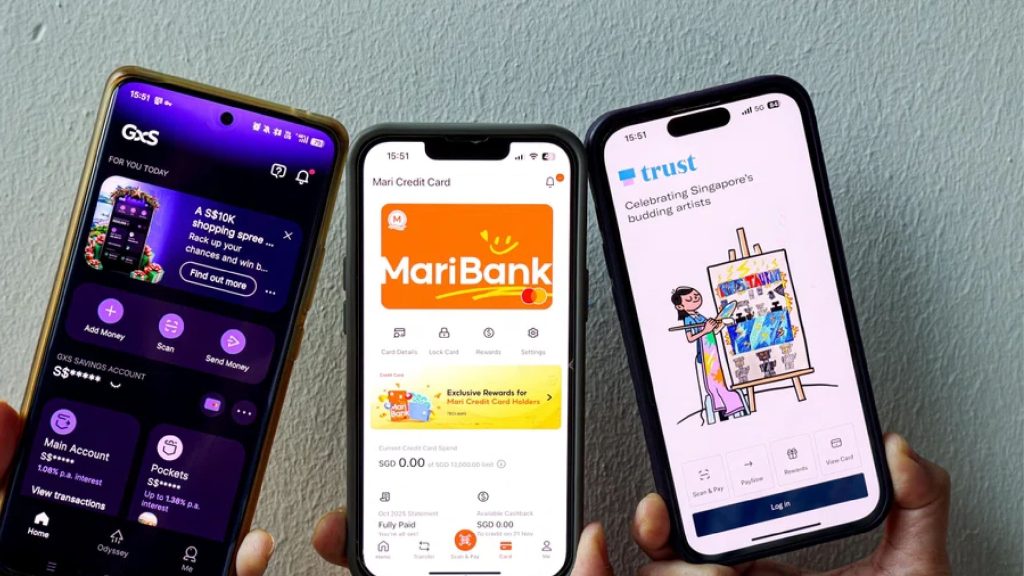
Best Savings Account Singapore 2026: Digital Banks and Highest Interest Rate Comparison

Singapore’s banking industry has expanded beyond traditional financial institutions. In recent years, the Monetary Authority of Singapore granted digital banking licenses to new players, increasing competition and improving savings account interest offerings.

Digital banks operate primarily through mobile apps without physical branches. Their lower operating costs allow them to offer competitive interest rates and fewer service fees.

Key advantages of digital banks include faster account opening, simplified user interfaces, and competitive savings yields. Traditional banks, however, still dominate in areas such as lending services and wealth management.

More information about digital bank regulation can be found on the Monetary Authority of Singapore website at https://www.mas.gov.sg.

Traditional Banks vs Digital Banks

Understanding the differences between traditional and digital bank Singapore services helps consumers choose the right savings account.

Traditional banks typically offer integrated financial services including loans, credit cards, and investment portfolios. Their savings accounts often use tiered interest systems that reward salary crediting, card spending, or bill payments.

Digital banks focus on simplicity and higher base interest rates without complex requirements. Many digital accounts have minimal fees and no minimum balance requirements.

Traditional banks provide stability and broad financial services, while digital banks appeal to tech savvy users who want higher yields and streamlined banking experiences.

Comparison Table: Best Savings Accounts Singapore 2026

Best Savings Account Singapore 2026: Digital Banks and Highest Interest Rate Comparison

The following table provides a simplified comparison of several savings account types available in Singapore.

Bank Type | Interest Rate Range | Minimum Balance | Monthly Fees
Traditional bank high interest account | 1.5 percent to 4.0 percent depending on conditions | S$1,000 to S$3,000 | Usually waived if requirements met
Digital bank savings account | 2.0 percent to 3.5 percent base rate | Often no minimum balance | Typically zero monthly fees
Basic savings account | 0.05 percent to 0.5 percent | S$500 to S$1,000 | Small maintenance fee possible

Interest rates change periodically, so reviewing updated rates from official bank websites is recommended.

For example, you can review current savings account information from major banks such as DBS at https://www.dbs.com.sg/personal/deposits/savings-accounts and OCBC at https://www.ocbc.com/personal-banking/deposits.

Understanding Risk Protection Through SDIC

When choosing the best savings account Singapore residents should also consider deposit protection.

The Singapore Deposit Insurance Corporation protects bank deposits held with participating institutions. Each depositor is insured up to S$75,000 per bank in the event of a bank failure.

This protection covers standard deposit products such as savings accounts and fixed deposits. It does not apply to investment products, structured deposits, or foreign currency investment instruments.

SDIC protection ensures that even if a financial institution encounters problems, depositors have a safety net.

More details can be found on the official SDIC website at https://www.sdic.org.sg.

Strategies to Maximize the Highest Interest Rate Singapore Banks Offer

Many savings accounts advertise high interest rates, but the maximum rate is often achievable only when certain requirements are met.

One common strategy is salary crediting. Several banks offer bonus interest when customers deposit their monthly salary into the account.

Another strategy involves card spending. Some accounts increase interest rates when a minimum monthly credit card spending threshold is reached.

Bill payment services also contribute to interest bonuses. Linking utility or subscription payments to a savings account can unlock additional interest tiers.

Finally, maintaining a higher balance may increase interest rates in tiered accounts. However, it is important to calculate whether the incremental yield justifies holding large amounts in cash rather than investing elsewhere.

For a detailed explanation of savings strategies, refer to financial education resources such as https://www.investopedia.com/articles/pf/09/high-yield-savings-account.asp.

Case Simulations for Savings Growth

To better understand potential returns, consider the following simplified examples.

Example 1: S$10,000 Savings

If S$10,000 is deposited in an account with an average interest rate of 2.5 percent annually, the yearly interest would be approximately S$250.

This level of savings typically benefits from accounts that offer competitive base interest rates without requiring complex conditions.

Example 2: S$50,000 Savings

With S$50,000 in a savings account earning 3 percent annually, total interest could reach around S$1,500 per year.

Some tiered savings accounts provide higher interest rates for balances within specific ranges, making mid level savings particularly advantageous.

Example 3: S$100,000 Savings

At S$100,000 and an average annual interest rate of 3.5 percent, yearly interest income could reach approximately S$3,500.

However, deposit insurance coverage limits should be considered. Since SDIC protects up to S$75,000 per bank, spreading funds across multiple institutions can reduce risk exposure.

Additional Factors to Consider When Choosing a Savings Account

Interest rates are important, but they should not be the only factor when selecting a best savings account Singapore.

Digital banking features can significantly improve user experience. Mobile applications that support instant transfers, spending analysis, and automated savings tools provide additional value.

Customer service quality also matters, especially when dealing with large balances or complex transactions.

Finally, consider integration with other financial services. Some traditional banks provide higher interest rates when customers hold multiple products such as credit cards, insurance policies, or investment accounts.

Tips for Choosing the Best Savings Account Singapore Residents Can Use

Evaluate whether you prefer digital convenience or traditional banking support.

Compare both base interest rates and maximum promotional rates.

Check minimum balance requirements to avoid unnecessary monthly fees.

Confirm that the bank participates in SDIC deposit insurance.

Diversify large deposits across multiple institutions if balances exceed insurance limits.

Conclusion

The search for the best savings account Singapore offers in 2026 has become more complex due to the growing presence of digital bank Singapore institutions and evolving interest rate structures. While traditional banks remain dominant in the financial ecosystem, digital banks have introduced competitive alternatives with attractive interest rates and streamlined mobile banking experiences.

For savers looking to achieve the highest interest rate Singapore banks provide, understanding bonus interest tiers, deposit insurance coverage, and account conditions is essential. By comparing available options carefully and structuring deposits strategically, individuals can significantly increase the return on their savings while maintaining financial security.


]]>
Best Side Hustles in Singapore 2026: Legal, Profitable and CPF-Compliant Options https://about.sg/best-side-hustles-singapore-2026/ Fri, 06 Mar 2026 16:45:03 +0000 https://about.sg/?p=2409

The demand for a side hustle Singapore workers can rely on has increased significantly in recent years. Rising living expenses, career flexibility, and digital opportunities have encouraged many residents to explore part time jobs Singapore professionals use to earn extra income.

In 2026, side hustles are no longer limited to traditional part-time work. The gig economy, online services, and digital entrepreneurship have created multiple income streams that can be managed alongside full-time employment.

This guide explains the most profitable and legal options to earn extra income Singapore residents commonly pursue, including gig platforms, digital services, tax obligations, and CPF considerations.

Why Side Hustles Are Growing in Singapore

Best Side Hustles in Singapore 2026: Legal, Profitable and CPF-Compliant Options

Several factors have increased the popularity of side hustles in Singapore.

First, the cost of living has continued to rise, especially in housing and transportation. Second, many professionals prefer income diversification rather than relying on a single employer. Third, digital platforms make it easier to monetize skills online.

According to workforce insights published by the Ministry of Manpower, flexible work arrangements and freelance opportunities are becoming more common in Singapore’s economy. More information about employment regulations can be found at https://www.mom.gov.sg.

Gig Economy Platforms in Singapore

The gig economy provides flexible part time jobs Singapore workers can start with minimal barriers. These roles often pay hourly and allow workers to choose their own schedules.

Ride-Hailing Services

Driving for ride-hailing platforms is one of the most common side hustle Singapore options.

Popular platforms include Grab and Gojek.

Estimated hourly income
SGD 15 to SGD 30 depending on peak hours and location.

Requirements
Valid driver license
Private hire vehicle driver vocational licence
Vehicle ownership or rental

More information about licensing can be found on the Land Transport Authority website at https://www.lta.gov.sg.

Food Delivery Platforms

Food delivery continues to be a major gig economy sector.

Popular platforms include
GrabFood
Foodpanda
Deliveroo

Estimated hourly income
SGD 12 to SGD 25 depending on delivery demand and working hours.

Advantages
Flexible schedule
Low entry barrier
Suitable for cyclists and motorbike riders

Limitations
Income fluctuates with demand and weather conditions.

Freelance Gig Platforms

Freelancing is one of the fastest growing ways to earn extra income Singapore professionals pursue.

Common platforms include
Upwork
Fiverr
Freelancer

Freelance services in demand include
Graphic design
Copywriting
Programming
Digital marketing
Video editing

Estimated hourly income
SGD 20 to SGD 80 depending on skill level and client demand.

Guidance on freelancing and self employment tax responsibilities can be found through the Inland Revenue Authority of Singapore at https://www.iras.gov.sg.

Online Income Options in Singapore

Best Side Hustles in Singapore 2026: Legal, Profitable and CPF-Compliant Options

Online business opportunities allow individuals to scale income beyond hourly work.

Digital Services

Selling digital services is one of the most profitable side hustle Singapore professionals explore.

Examples include
SEO consulting
Website design
Content writing
Online tutoring
Social media management

Digital services have high margins because they require minimal physical inventory.

E Commerce Businesses

Running an online store is another popular method to earn extra income Singapore entrepreneurs adopt.

Common platforms include
Shopify
Shopee
Lazada

Popular product niches include
Beauty products
Home accessories
Fitness equipment
Digital gadgets

Entrepreneurs should review e commerce guidelines from Enterprise Singapore at https://www.enterprisesg.gov.sg.

Affiliate Marketing

Affiliate marketing allows individuals to earn commissions by promoting products online.

Typical channels include
Blogs
YouTube channels
Social media content
Email newsletters

Income varies depending on audience size and product category. Some affiliate marketers earn a few hundred dollars monthly while others scale into full time businesses.

For digital marketing strategies, you can read this guide on https://ahrefs.com/blog/affiliate-marketing

Income Estimates Per Hour for Side Hustles

Below is a realistic comparison of potential hourly earnings for different part time jobs Singapore residents pursue.

Ride hailing driver
SGD 15 to SGD 30 per hour

Food delivery courier
SGD 12 to SGD 25 per hour

Freelance design or writing
SGD 20 to SGD 60 per hour

Programming and tech freelance work
SGD 40 to SGD 80 per hour

Online tutoring
SGD 25 to SGD 70 per hour

Affiliate marketing or ecommerce
Income varies widely and depends on traffic and sales.

These estimates vary based on experience, time commitment, and market demand.

Understanding IRAS Tax Obligations

Anyone who earns income through a side hustle Singapore activity must understand tax obligations.

The Inland Revenue Authority of Singapore classifies freelance earnings as self employment income.

Key points

Freelancers must report their income in annual tax filings.
Business related expenses may be deductible.
Accurate records of earnings and costs must be maintained.
Income tax rates depend on total annual income.

More details about filing obligations can be found at https://www.iras.gov.sg/taxes/individual-income-tax/self-employed-and-partners.

Failure to declare freelance income can lead to penalties, so compliance is essential.

CPF Considerations for Freelancers

CPF rules are important when earning extra income Singapore residents should understand.

Employees working full time jobs usually contribute to CPF through employer payroll deductions. However, self employed individuals must manage CPF contributions independently.

Key considerations

Freelancers must contribute to MediSave if their net trade income exceeds certain thresholds.
CPF contributions are calculated based on net earnings after expenses.
Higher voluntary CPF contributions can improve retirement savings.

Detailed CPF guidelines are available at https://www.cpf.gov.sg.

Understanding CPF obligations helps ensure long term financial stability.

Tips to Build a Sustainable Side Hustle in Singapore

Choose a side hustle that matches your existing skills.
Start with platforms that provide immediate income opportunities.
Build long term digital assets such as websites or online stores.
Track all earnings and expenses for tax reporting.
Invest part of your extra income into skills development.

Successful side hustles often begin as small projects but can grow into significant revenue streams.

Conclusion

Side hustle Singapore opportunities continue to expand in 2026 due to digital platforms, flexible work arrangements, and the growing gig economy. From ride hailing and delivery services to freelancing and online businesses, there are multiple ways to earn extra income Singapore residents can explore.

However, successful side hustles require planning, tax compliance, and careful financial management. Understanding IRAS tax obligations and CPF contributions ensures that additional income remains both legal and sustainable.

For professionals seeking financial security, a well chosen side hustle can provide an important second income stream and long term career flexibility in Singapore’s evolving economy.

]]>
Cost of Living in Singapore 2026: Updated Breakdown for Expats, PRs and Locals https://about.sg/cost-of-living-in-singapore-2026-guide/ Mon, 02 Mar 2026 06:13:52 +0000 https://about.sg/?p=2402

The cost of living in Singapore in 2026 continues to be a critical consideration for expatriates, permanent residents, and locals planning relocation or long-term financial strategies. As a global business hub in Southeast Asia, Singapore offers political stability, strong currency, world-class infrastructure, and efficient public services. However, these benefits come with relatively high monthly expenses compared to neighboring cities such as Kuala Lumpur and Jakarta.

This guide of cost of living in Singapore provides a detailed and structured breakdown of monthly expenses, housing comparisons, regional cost benchmarks, and realistic budget simulations to support informed decision-making.

Why the Cost of Living in Singapore Remains High

Singapore’s limited land supply, strong currency, and global investment appeal contribute to high housing prices and rental rates. In addition, imported goods, private healthcare for foreigners, and vehicle ownership significantly increase overall living expenses.

However, average salaries in Singapore are generally higher than in many Southeast Asian cities, partially offsetting the elevated costs.

For official housing regulations and eligibility rules, refer to the Housing and Development Board at https://www.hdb.gov.sg and work pass guidelines at https://www.mom.gov.sg.

Monthly Expense Breakdown in Singapore 2026

Cost of Living in Singapore 2026: Updated Breakdown for Expats, PRs and Locals

Understanding the major expense categories is essential when calculating the cost of living in Singapore.

1. Rent in Singapore

Housing is the largest contributor to monthly expenses.

Estimated rental ranges in 2026:

HDB 3-room flat: SGD 2,800 to 3,500
HDB 4-room flat: SGD 3,200 to 4,200
Condominium 1-bedroom: SGD 3,800 to 5,500
Condominium 2-bedroom: SGD 5,000 to 7,500
Co-living private room: SGD 1,500 to 2,500

Location, proximity to MRT stations, and amenities significantly influence pricing. Central areas such as Orchard and Marina Bay command higher rents compared to suburban estates.

2. Utilities and Internet

Utilities include electricity, water, gas, and broadband services.

Estimated monthly utilities:

Single or couple: SGD 150 to 220
Family of four: SGD 280 to 400
Internet broadband: SGD 40 to 60

Electricity costs rise significantly with daily air conditioning usage.

3. Transportation

Singapore has an efficient public transport system operated by companies such as SMRT and SBS Transit.

Estimated transport costs:

Public transport monthly spending: SGD 100 to 150
Ride-hailing occasional use: SGD 100 to 300
Private car ownership: SGD 1,500 to 2,500 including COE, insurance, fuel, and parking

Car ownership dramatically increases the cost of living in Singapore due to the Certificate of Entitlement system. More information is available at https://www.lta.gov.sg.

4. Food and Groceries

Food expenses vary based on lifestyle.

Hawker-focused lifestyle: SGD 400 to 700 per person
Mixed dining lifestyle: SGD 800 to 1,200 per person
Family grocery budget: SGD 800 to 1,200

Eating regularly at hawker centres helps maintain manageable monthly expenses compared to frequent restaurant dining.

5. Health Insurance

Healthcare quality in Singapore is high, but private insurance for foreigners can be expensive.

Residents using MediShield Life: SGD 100 to 300 monthly equivalent
Private expat insurance plans: SGD 250 to 600 monthly

Insurance is essential for relocation planning to avoid unexpected medical expenses.

Housing Comparison: HDB vs Condo vs Co-Living

Cost of Living in Singapore 2026: Updated Breakdown for Expats, PRs and Locals

Choosing the right housing type directly affects the overall cost of living in Singapore.

HDB Flats

Advantages
Lower rental costs
Strong community environment
Suitable for families

Limitations
Restrictions for foreigners on purchase
Fewer luxury facilities

Condominiums

Advantages
Facilities such as swimming pools and gyms
Popular among expatriates
Enhanced security

Limitations
Higher rental prices
Maintenance fees

Co-Living Spaces

Advantages
Flexible lease terms
Fully furnished units
Ideal for short-term stays

Limitations
Shared facilities
Limited privacy

Housing choice should align with employment stability, family size, and long-term residency plans.

Cost Comparison: Singapore vs Kuala Lumpur vs Jakarta

To understand regional affordability, consider average monthly expenses for a single professional.

Singapore: SGD 3,500 to 5,500
Kuala Lumpur: SGD 1,500 to 2,500 equivalent
Jakarta: SGD 1,200 to 2,200 equivalent

Key differences:

Rent in Singapore is approximately two to three times higher than in Kuala Lumpur or Jakarta.
Vehicle ownership in Singapore is significantly more expensive.
Groceries and imported goods cost more in Singapore.
Healthcare standards are generally higher in Singapore.

However, Singapore offers higher median salaries and stronger currency stability.

For regional statistics, refer to official portals such as https://www.dosm.gov.my for Malaysia and https://www.bps.go.id for Indonesia.

Cost of Living in Singapore Budget Simulation Tables 2026

Single Professional Budget

Rent shared accommodation: SGD 1,800
Utilities: SGD 180
Transport: SGD 120
Food: SGD 600
Insurance: SGD 300
Miscellaneous: SGD 400

Total: SGD 3,400 per month

Couple Without Children

Condo 1-bedroom rent: SGD 4,500
Utilities: SGD 220
Transport: SGD 250
Food: SGD 1,200
Insurance: SGD 600
Miscellaneous: SGD 800

Total: SGD 7,570 per month

Family of Four

HDB 4-room rent: SGD 3,800
Utilities: SGD 350
Transport: SGD 400
Food and groceries: SGD 1,200
Insurance: SGD 1,000
Child expenses and enrichment: SGD 1,500
Miscellaneous: SGD 1,000

Total: SGD 9,250 per month

These simulations reflect moderate lifestyle assumptions in 2026.

Tips to Reduce the Cost of Living in Singapore Legally and Efficiently

  1. Use public transport instead of owning a private vehicle.

  2. Choose housing near MRT stations to reduce transport expenses.

  3. Compare rental listings across multiple property platforms.

  4. Limit air conditioning usage to reduce electricity bills.

  5. Take advantage of supermarket promotions and bulk buying.

  6. Review insurance plans annually for cost efficiency.

  7. Consider long-term leases to negotiate lower monthly rent.

  8. Explore government grants if eligible through official portals.

Financial discipline and lifestyle adjustments can significantly reduce monthly spending.

Conclusion

The cost of living in Singapore in 2026 remains high compared to neighboring capitals, primarily driven by housing and vehicle ownership expenses. However, Singapore continues to offer strong employment opportunities, a stable financial environment, and high-quality public services.

For expats, PRs, and locals planning relocation or lifestyle upgrades, detailed budgeting and realistic expectations about cost of living in Singapore are essential. By understanding monthly expense breakdowns and comparing housing options carefully, you can manage living expenses effectively and build long-term financial stability in Singapore.

Regularly reviewing updated figures ensures your relocation or financial planning aligns with current market conditions.

]]>
Singapore Inflation and Interest Rate Outlook 2026: What Households and Businesses Need to Know https://about.sg/singapore-inflation-and-interest-rate-outlook-2026/ Fri, 20 Feb 2026 15:46:55 +0000 https://about.sg/?p=2372 Why Financial Conditions in Singapore Are a Hot Topic

Singapore Inflation and Interest Rate Outlook 2026: What Households and Businesses Need to Know

Financial conditions in Singapore have become one of the most discussed topics recently as Singapore inflation pressures, global uncertainty, and interest rate movements continue to shape the economic landscape. Many households are asking how rising costs affect daily expenses, while businesses are closely watching borrowing costs and consumer demand.

Recent commentary from the Monetary Authority of Singapore indicates that Singapore inflation is expected to moderate but remain a key concern as the economy navigates external risks such as global demand fluctuations and geopolitical uncertainty. Analysts note that careful policy calibration remains necessary to maintain price stability while supporting growth.

The Problem: Persistent Cost Pressures on Households and Businesses

Despite signs of easing Singapore inflation compared to previous peaks, Singapore still faces elevated price levels in areas such as housing, services, and food. This creates pressure on household budgets and business margins.

Economists have highlighted that core inflation has been gradually declining but remains sensitive to global supply conditions and domestic wage trends. The government continues to monitor these developments closely as part of its broader economic strategy.

Businesses also face higher financing costs due to tighter global financial conditions. Companies that rely on loans for expansion or working capital must adapt to a higher interest rate environment.

The Agitation: Why the Outlook Still Feels Uncertain

Singapore Inflation and Interest Rate Outlook 2026: What Households and Businesses Need to Know

Even with Singapore inflation expected to ease, uncertainty remains due to external factors. Singapore’s open economy is highly sensitive to global trade cycles, meaning slowdowns in major economies can quickly affect local growth.

Policy discussions under the leadership of Prime Minister Lawrence Wong emphasize balancing fiscal support with long term sustainability, especially as Singapore navigates structural changes such as aging demographics and evolving global supply chains.

Market observers warn that volatility in global interest rates could influence domestic borrowing costs, affecting mortgages, business loans, and investment returns.

The Solution: How MAS Policy Shapes Financial Stability

The Monetary Authority of Singapore manages monetary policy primarily through the exchange rate rather than traditional interest rate targeting. By adjusting the Singapore dollar policy band, MAS aims to control imported inflation and maintain price stability.

Recent policy statements suggest a cautious stance, maintaining a policy path that supports disinflation while remaining responsive to economic risks. This approach helps anchor inflation expectations and provides a predictable environment for financial planning.

For households, this means gradual relief from price pressures over time, while businesses can expect a stable policy framework to guide investment decisions.

What This Means for Households

Singapore Inflation and Interest Rate Outlook 2026: What Households and Businesses Need to Know

Consumers should prepare for a period of Singapore inflation rather than a rapid return to very low price growth. Financial experts recommend focusing on budgeting, building emergency savings, and reviewing loan structures.

Mortgage holders may consider monitoring refinancing opportunities as global rates evolve. Meanwhile, savers can benefit from relatively higher deposit rates compared to previous years.

What This Means for Businesses and Investors

Companies should prioritize cost management and maintain flexibility in financial planning. Diversifying revenue streams and managing cash flow carefully can help mitigate risks associated with slower growth or demand shifts.

Investors are paying close attention to sectors that benefit from stable domestic demand, as well as opportunities arising from Singapore’s position as a regional financial hub.

Outlook for 2026: Gradual Stabilization with Watchful Optimism

Singapore Inflation and Interest Rate Outlook 2026: What Households and Businesses Need to Know

The overall outlook points toward gradual stabilization in Singapore inflation and steady economic growth, supported by prudent policy measures and resilient domestic fundamentals. While risks remain, Singapore’s strong institutions and proactive policymaking provide confidence in its ability to navigate challenges.

As financial conditions evolve, staying informed and adapting strategies will be essential for households, businesses, and investors alike.

Conclusion: Staying Financially Prepared in a Changing Environment

Understanding the Singapore inflation and interest rate outlook is critical for making informed financial decisions in Singapore. By keeping track of policy developments and adjusting plans accordingly, individuals and organizations can navigate uncertainty with greater confidence.

The key takeaway is preparedness. Whether managing personal finances or running a business, proactive planning remains the best defense against economic fluctuations.

]]>
Singapore Dollar Reaches Strongest Level Against US Dollar in Over 11 Years https://about.sg/singapore-dollar-highest-against-us-dollar/ Mon, 26 Jan 2026 14:26:00 +0000 https://about.sg/?p=2287 The Singapore dollar has surged to its strongest level against the US dollar in more than a decade, marking a significant moment for currency markets and investors alike. The local currency climbed to levels last seen in October 2014, reflecting a mix of global uncertainty, weakening sentiment toward the US dollar, and confidence in Singapore’s economic and monetary stability.

This latest rally highlights Singapore’s role as a regional safe haven and underscores how global capital flows continue to favour currencies backed by predictable policies and strong fundamentals.

What Is Driving the Singapore Dollar Higher

Singapore Dollar Reaches Strongest Level Against US Dollar in Over 11 Years

The Singapore dollar strengthened to around 1.2678 against the US dollar, gaining approximately 0.4 per cent in a single session. This move coincided with renewed pressure on the greenback, as traders reacted to speculation surrounding potential US involvement in Japan’s foreign exchange intervention efforts.

Market participants interpreted recent actions by the Federal Reserve Bank of New York as a signal that US authorities may be willing to support Japan in stabilising the yen. This speculation triggered a sharp rally in the Japanese currency, which rose as much as 1.2 per cent against the US dollar, dragging the broader US dollar lower in the process.

As the US dollar weakened, investors shifted funds into alternative currencies perceived as stable and resilient, including the Singapore dollar.

US Dollar Weakness Boosts Asian Currencies

Singapore Dollar Reaches Strongest Level Against US Dollar in Over 11 Years

The rally in the Singapore dollar was not an isolated event. A widely watched index tracking the US dollar against a basket of major currencies fell 0.4 per cent to its lowest level since September, extending a 1.6 per cent decline from the previous week.

Other Asian currencies also benefited from this trend. The Malaysian ringgit strengthened to its highest level since 2018, while the South Korean won rose to a three-week high. These movements reflect a broader regional response to US dollar softness, amplified by expectations of policy coordination among major central banks.

For Singapore, this environment has proven particularly favourable, given its reputation for currency stability and disciplined monetary management.

MAS Policy Stability Supports the Singdollar

Singapore Dollar Reaches Strongest Level Against US Dollar in Over 11 Years

Another key factor supporting the Singapore dollar is the expected policy stance of the Monetary Authority of Singapore. Market expectations suggest that MAS will keep its monetary policy settings unchanged at its upcoming meeting, as core inflation remains steady and within manageable levels.

Unlike most central banks, MAS does not rely on interest rates as its primary policy tool. Instead, it manages monetary conditions by guiding the nominal effective exchange rate of the Singapore dollar, commonly referred to as the S$NEER. This framework allows the currency to move within a controlled policy band, providing flexibility while maintaining overall stability.

The market widely anticipates that MAS will maintain its current S$NEER policy slope and width, reinforcing confidence in the Singapore dollar’s trajectory.

Near-Term Outlook for the Singapore Dollar

Singapore Dollar Reaches Strongest Level Against US Dollar in Over 11 Years

Currency strategists believe the Singapore dollar could continue to strengthen in the near term if US dollar weakness persists. Some analysts project that the exchange rate may test the 1.2600 level against the US dollar, provided there is a sustained breakdown in the greenback.

However, further gains will depend largely on global developments rather than domestic factors alone. Any shift in US monetary policy expectations, renewed strength in the US dollar, or changes in global risk sentiment could influence the pace and extent of the Singdollar’s appreciation.

That said, Singapore’s strong economic fundamentals provide a solid base for the currency even in volatile conditions.

Why Investors Favour Singapore Assets

The strength of the Singapore dollar also reflects sustained investor interest in Singapore’s financial markets. Over recent years, global investors have been drawn to the city-state for its dividend-rich stock market, AAA-rated sovereign bonds, and transparent, predictable governance.

The benchmark Straits Times Index is currently trading at record highs, reinforcing Singapore’s appeal as a stable investment destination. At the same time, the Singapore dollar has gained around 6 per cent against the US dollar over the past 12 months, adding currency appreciation to the list of investor benefits.

In periods of global uncertainty, these characteristics make Singapore an attractive alternative to more volatile markets.

What a Stronger Singapore Dollar Means for Businesses and Consumers

A stronger Singapore dollar has mixed implications for the local economy. For consumers, it can translate into cheaper imports, lower inflationary pressure, and improved purchasing power, especially for overseas travel and imported goods.

For exporters and companies with significant overseas revenue, however, currency strength may compress margins when foreign earnings are converted back into Singapore dollars. Policymakers will be watching these dynamics closely to ensure that currency appreciation remains orderly and aligned with economic fundamentals.

MAS’s exchange-rate-based framework is designed precisely to manage such trade-offs, balancing growth with price stability.

Long-Term Perspective on the Singapore Dollar

While short-term currency movements often grab headlines, the Singapore dollar’s long-term performance has been shaped by consistent policy, fiscal discipline, and economic resilience. Its latest rise to an 11-year high reinforces the perception of Singapore as a safe and reliable financial hub in an increasingly uncertain global environment.

As global markets continue to navigate geopolitical risks and shifting monetary policies, the Singapore dollar is likely to remain a key reference point for investors seeking stability in Asia.

]]>
Silver Dealers in Singapore Face Stock Shortages Amid Price Surge and Buying Frenzy https://about.sg/silver-dealers-in-singapore-stock-shortage/ Mon, 12 Jan 2026 17:04:55 +0000 https://about.sg/?p=2253 Silver has emerged as one of the most talked-about investment assets in recent months, and Singapore is feeling the impact firsthand. As global silver prices soar to historic levels, physical silver bullion is becoming increasingly difficult to secure locally. Silver dealers in Singapore across the island are grappling with shrinking inventories, while investors rush to buy before prices climb even higher.

This surge in demand has created a perfect storm. Limited global supply, strong industrial usage, and heightened investor interest have combined to strain an already tight market. As a result, waitlists for physical silver in Singapore now stretch for weeks or even months.

The Problem: Rising Prices Meet Limited Supply

Silver Dealers in Singapore Face Stock Shortages Amid Price Surge and Buying Frenzy

Silver staged an exceptional rally in 2025, recording gains of more than 160 percent and breaking past the US$80 per ounce mark for the first time. This performance outpaced gold, which also enjoyed a strong year but rose at a comparatively slower pace.

The sharp rise in silver prices has triggered a buying frenzy among investors seeking diversification and protection against economic uncertainty. However, unlike paper assets, physical silver depends on mining output, refining capacity, and logistics. These supply-side constraints have made it difficult for dealers to replenish stock quickly.

Bullion retailers in Singapore report that deliveries that once took one to two weeks are now delayed for months. Some refineries are reportedly hesitant to accept new orders due to overwhelming demand and limited production capacity.

Investor Demand Accelerates the Buying Frenzy

The rally in silver prices has dramatically altered investor behaviour. According to local bullion dealers, sales of gold and silver surged nearly sixfold in late 2025 as customers rushed to lock in purchases.

Interestingly, the profile of buyers is also changing. Where silver investment was once dominated by middle-aged local buyers, dealers are now seeing younger investors in their 20s entering the market. Foreign buyers have also begun turning to smaller, independent dealers after larger retailers ran low on stock.

Despite silver’s reputation for higher volatility compared to gold, many investors are now choosing silver as their preferred precious metal. Dealers estimate that close to 90 percent of current customers opt for silver over gold, attracted by its strong price momentum and perceived upside potential.

Dealers Scramble to Adapt to Tighter Conditions

With physical silver increasingly scarce, Silver dealers in Singapore are being forced to adapt quickly. Many are placing larger bulk orders in anticipation of future shortages, even if delivery timelines remain uncertain.

Some retailers have also expanded their online sales channels to meet growing demand from digital-savvy buyers. Online platforms allow investors to reserve bullion earlier, even if actual delivery is delayed.

At the same time, profit margins on silver products have widened as dealers attempt to manage risk and secure supply. While higher margins may help retailers cope with volatility, they also reflect the intense pressure within the physical silver market.

Industrial Demand Drives Long-Term Pressure

Silver Dealers in Singapore Face Stock Shortages Amid Price Surge and Buying Frenzy

Beyond investors, industrial usage remains the single largest driver of silver demand globally. Approximately 60 percent of the world’s silver consumption comes from industrial sectors, including electronics, electric vehicles, solar panels, and semiconductor manufacturing.

Silver’s high conductivity makes it essential for renewable energy technologies and advanced electronics. As global demand for electric vehicles and clean energy continues to grow, so does the need for silver.

Economists point out that silver mining output has struggled to keep pace with this industrial demand over the past five years. This persistent supply gap has contributed significantly to rising prices and tighter availability in markets like Singapore.

Will Consumers Feel the Impact?

Despite record silver prices, experts believe the immediate impact on everyday consumers in Singapore will remain limited. While manufacturers may eventually pass on higher input costs, silver typically represents only a small portion of the total cost of products such as electric vehicles, batteries, and solar panels.

Industry representatives note that other factors, including manufacturing processes, labour, and shipping costs, play a far larger role in determining final consumer prices. As a result, any price increases linked to silver are expected to be gradual rather than sudden.

However, economists caution that sustained premiums for physical silver in Asia could signal deeper supply constraints. If industrial buyers continue paying higher prices to secure silver, the pressure on global markets may intensify.

Outlook: What Investors and Dealers Are Watching

Looking ahead, analysts are closely monitoring whether physical silver continues to trade at a premium in Asian markets. Such a trend would indicate that industrial demand is still outpacing supply, potentially supporting higher prices.

Some industrial users are already exploring alternatives such as platinum and palladium, both of which also saw strong gains last year. Nevertheless, silver remains difficult to replace in many applications, meaning demand is unlikely to ease anytime soon.

For Singapore investors, the current environment highlights the importance of timing and access. With waitlists growing longer and stock increasingly scarce, physical silver has become not just an investment choice, but a test of patience.

]]>
Singapore CDC Vouchers 2026: How to Claim S$300 and Where to Use It https://about.sg/cdc-vouchers-singapore-2026/ Mon, 05 Jan 2026 16:36:29 +0000 https://about.sg/?p=2241 Rising living costs remain a key concern for many Singaporean households, from groceries to daily necessities. To provide immediate and practical relief, the Singapore government has rolled out the latest tranche of Community Development Council vouchers, allowing every eligible household to claim S$300 starting from January 2. This initiative continues the long-standing effort to support residents while strengthening heartland businesses across the island.

More than just financial assistance, the CDC voucher scheme plays a dual role by easing household expenses and sustaining local merchants, hawkers, and supermarkets that form the backbone of Singapore’s neighbourhood economy.

What Are CDC Vouchers and Who Can Claim Them

Singapore CDC Vouchers 2026: How to Claim S$300 and Where to Use It

CDC vouchers are digital vouchers issued to Singaporean households to help offset everyday expenses. Under the latest tranche, each household is entitled to a total value of S$300.

The vouchers are split into two equal portions. S$150 can be used at participating heartland merchants and hawkers, while the remaining S$150 is designated for use at participating supermarkets. This balanced structure ensures households can manage both cooked food expenses and grocery shopping more effectively.

Any Singaporean household can claim the vouchers, with only one member required to log in using Singpass on the official government website. Once claimed, the vouchers can be shared digitally among household members, making them easy and flexible to use.

How to Claim the S$300 CDC Vouchers

Claiming the CDC vouchers is a simple digital process. A household member can visit the official CDC voucher portal and log in using Singpass. After a successful claim, an official SMS from gov.sg will be sent to the registered mobile number.

This message contains a unique voucher link that can be shared with other household members. There is no need to download additional applications or provide banking details. The vouchers remain valid until December 31, 2026, giving households ample time to plan and spend wisely.

Where CDC Vouchers Can Be Used

Singapore CDC Vouchers 2026: How to Claim S$300 and Where to Use It

The reach of the CDC voucher scheme continues to expand. More than 24,000 heartland merchants and hawkers have joined the programme, an increase compared to the previous year. These include food stalls, coffee shops, provision shops, and neighbourhood services that many residents rely on daily.

In addition, eight major supermarket chains are participating in the scheme. These include Ang Mo Supermarket, Cold Storage, Giant Singapore, HAO Mart, NTUC FairPrice, Prime Supermarket, Sheng Siong, and U Stars Supermarket. This wide coverage ensures households across different estates can conveniently use their vouchers close to home.

Supporting Households Amid Economic Uncertainty

Despite strong economic growth in 2025, Singapore continues to face global challenges such as shifting supply chains, evolving trade policies, rapid technological changes, and the impact of artificial intelligence on jobs and businesses. These uncertainties make short-term support measures like CDC vouchers especially meaningful.

The CDC voucher scheme provides immediate reassurance to households while complementing longer-term economic strategies designed to keep Singapore competitive and resilient. Together, these efforts aim to protect everyday livelihoods while preparing the economy for future transitions.

Impact of CDC Vouchers on Residents and Local Businesses

The effectiveness of the CDC voucher scheme is reflected in its consistently high claim and usage rates. Across previous tranches, claim rates have exceeded 97 percent, demonstrating strong public trust and relevance.

In the most recent tranche alone, more than 1.3 million households successfully claimed their vouchers, with spending exceeding S$650 million. Nearly half of this amount was spent at heartland merchants and hawkers, highlighting the scheme’s direct support for small local businesses.

Overall, spending across past CDC and SG60 voucher tranches has reached nearly S$4 billion, significantly boosting neighbourhood economies since the scheme’s nationwide launch.

Assistance for Seniors and Digitally Less Confident Residents

Recognising that not all residents are equally comfortable with digital processes, additional support measures have been put in place. Digital ambassadors and volunteers will be stationed at selected community centres and digital hubs to guide residents through the claiming process.

These efforts ensure inclusivity, especially for seniors and those less familiar with online platforms, reinforcing the scheme’s goal of leaving no household behind.

Safety Reminders and Donation Option

Residents are advised to remain vigilant against scams. Claiming CDC vouchers does not require sharing bank details, transferring money, or installing apps from unofficial sources. Any suspicious messages should be reported to the relevant authorities immediately.

Households that do not require the vouchers can also choose to give back through the CDC Vouchers Donation Scheme, which allows unused vouchers to be donated to approved charities until January 31, 2026.

Conclusion: More Than Just Vouchers

The S$300 CDC vouchers represent more than short-term financial assistance. They are a practical tool that helps households manage daily costs, supports heartland merchants, and strengthens community resilience. As Singapore navigates economic changes ahead, initiatives like this continue to play a vital role in supporting both people and local businesses.

]]>
CPF Changes from 2026: Higher Wage Ceilings, Contribution Rates and New Savings Schemes Explained https://about.sg/cpf-changes-from-2026-higher-wage-ceilings-contribution-rates-and-new-savings-schemes-explained/ Tue, 23 Dec 2025 08:08:35 +0000 https://about.sg/?p=2192 Starting in 2026, Singapore’s Central Provident Fund system will see several important updates aimed at strengthening retirement and healthcare adequacy. These changes affect monthly salary ceilings, contribution rates for older workers, retirement sums, and introduce expanded and new matching schemes. For employees, employers, and self-employed individuals, understanding these updates early is key to better financial planning.

This article breaks down the major CPF changes coming in 2026, explains why they matter, and highlights how different groups may be affected.

Increase in CPF Ordinary Wage Ceiling from January 2026

One of the most significant changes is the increase in the CPF ordinary wage ceiling. From Jan 1, 2026, the ceiling will rise from $7,400 to $8,000 per month.

The ordinary wage ceiling determines the maximum amount of monthly salary on which CPF contributions are calculated. Any salary earned above this limit is not subject to CPF contributions for that month.

The $600 increase marks the final phase of a gradual adjustment that began in September 2023. This phased approach was designed to give both employers and employees time to adapt to higher CPF contributions. The overall aim is to ensure that CPF savings keep pace with rising wages and living costs, especially as Singaporeans plan for longer retirements.

CPF Annual Salary Ceiling and Contribution Cap Remain Unchanged

While the monthly wage ceiling is increasing, other limits will stay the same in 2026. The CPF annual salary ceiling remains at $102,000. This is the maximum amount of total wages in a year that can be used to calculate CPF contributions. It includes both ordinary wages and additional wages such as bonuses.

In addition, the CPF annual contribution limit will continue to be capped at $37,740. This means there is no change to the maximum total CPF contributions that can be made in a year, regardless of income level.

Higher CPF Contribution Rates for Senior Workers

Another major update involves higher CPF contribution rates for older workers. These changes are part of ongoing efforts to help senior employees build stronger retirement savings as life expectancy increases.

From 2026, workers aged above 55 to 60 will see their total CPF contribution rate increase from 32.5 per cent to 34 per cent of monthly wages. Within this, the employee contribution rate will rise from 17 per cent to 18 per cent.

For workers aged above 60 to 65, the total CPF contribution rate will increase from 23.5 per cent to 25 per cent. The employee’s share will go up from 11.5 per cent to 12.5 per cent.

These adjustments gradually bring contribution rates for older workers closer to those of younger employees, improving long-term retirement adequacy while balancing employability concerns.

Higher Full Retirement Sum for Those Turning 55 in 2026

For Singaporeans turning 55 in 2026, the Full Retirement Sum will increase by about 3.5 per cent. The FRS will rise from $213,000 in 2025 to $220,400 in 2026.

The Full Retirement Sum serves as a benchmark for how much savings an individual should ideally have in their CPF Retirement Account to receive meaningful monthly payouts during retirement. Once set, a person’s FRS remains fixed for life based on the year they turn 55.

This increase reflects higher expected living costs and longer retirement needs.

New Retirement Sum Levels in 2026

With the increase in the Full Retirement Sum, the other retirement thresholds will also be adjusted.

In 2026, the Basic Retirement Sum will be $110,200, which is half of the FRS. The BRS is intended to provide basic monthly payouts that cover essential living expenses, excluding housing costs.

The Enhanced Retirement Sum will rise to $440,800, which is twice the FRS. This represents the maximum amount members aged 55 and above can top up their Retirement Account to in 2026, allowing for higher monthly payouts during retirement.

Expansion of the Matched Retirement Savings Scheme

Another key development in 2026 is the expansion of the Matched Retirement Savings Scheme. Previously focused on seniors with lower retirement savings, the scheme will be extended to include younger Singaporeans with disabilities.

Under the scheme, eligible individuals receive a dollar-for-dollar matching grant from the Government for cash top-ups made to their CPF Special Account. The matching is capped at $2,000 per year, with a lifetime limit of $20,000.

This expansion allows persons with disabilities to start building their retirement savings earlier, improving financial security over the long term. Eligibility depends on factors such as CPF balances, income level and the annual value of residential property. Those below 55 will also need verification of their disability status by the Ministry of Social and Family Development by Nov 1 of the current year to qualify for the following year.

Introduction of the Matched MediSave Scheme

In 2026, a new initiative known as the Matched MediSave Scheme will be launched for a five-year period. This scheme targets Singapore citizens aged 55 to 70 who have lower MediSave balances.

Under this programme, the Government will match every dollar of voluntary cash top-up made to an eligible member’s MediSave Account, up to an annual cap of $1,000. The matching grant will be credited in the following year.

The aim is to help older Singaporeans strengthen their healthcare savings, making it easier to pay for insurance premiums and approved medical treatments as healthcare needs increase with age.

Why These CPF Changes Matter

Taken together, the CPF changes in 2026 reflect a broader strategy to ensure retirement and healthcare adequacy in an ageing society. Higher wage ceilings allow CPF savings to grow in line with incomes, increased contribution rates support older workers, and enhanced matching schemes provide targeted help for vulnerable groups.

For individuals, understanding these updates early can support better financial decisions, from budgeting take-home pay to planning long-term retirement and healthcare needs. For employers, the changes underscore the importance of workforce planning and cost management in the years ahead.

]]>
Singapore Commits S$37 Billion to Research and Innovation from 2026 to 2030 https://about.sg/singapore-commits-s37-billion-to-research-and-innovation-from-2026-to-2030/ Fri, 05 Dec 2025 15:48:55 +0000 https://about.sg/?p=2172 Singapore is strengthening its position as a global innovation hub with a new S$37 billion investment plan dedicated to research, innovation and enterprise over the next five years. Announced by the National Research Foundation, this renewed commitment represents about 1 per cent of the nation’s GDP and reinforces Singapore’s long-term strategy of building a competitive, knowledge-driven economy.

This significant investment aims to accelerate scientific breakthroughs, nurture world-class talent, and boost technological leadership in areas that are critical to economic growth and national resilience.

A Strategic Investment in Singapore’s Future

The new allocation focuses on creating large-scale national programmes known as flagships and grand challenges. These initiatives target priority sectors such as semiconductors, healthy longevity, and emerging deep tech fields. Senior leaders have emphasised that maintaining consistent investment ensures that Singapore remains relevant and competitive amid global technological disruptions.

Senior Minister Lee Hsien Loong highlighted Singapore’s ongoing commitment, noting that the country has consistently invested around 1 per cent of its GDP in research and innovation. This stable foundation provides researchers and institutions with long-term confidence and allows critical scientific work to progress without disruption.

What the S$37 Billion Will Support

Of the S$37 billion, about S$3 billion has been allocated specifically to flagship programmes and grand challenges. These programmes are designed to ensure coordinated research efforts across sectors and produce high-impact outcomes.

Key focus areas include:

Longevity research
Semiconductor innovation
Advanced deep tech with commercialisation potential
AI development and responsible AI frameworks
Strengthening Singapore’s talent ecosystem

The goal is to align research with national priorities, enhance economic competitiveness, and address societal challenges such as ageing and healthcare sustainability.

The Role of Flagships and Grand Challenges

Flagships are mission-driven national programmes that support industries with high-value potential. One confirmed flagship focuses on the semiconductor sector, an industry where Singapore already plays a significant global role. The objective is to upgrade research capacity, attract high-value manufacturing, and support new deep-tech startups that advance chip technology.

Grand challenges, on the other hand, will address national-level issues. One announced challenge focuses on maximising healthy longevity. With one in four Singapore residents expected to be aged 65 or older by 2030, research on ageing, brain health and mobility will become critically important. Under this programme, Singapore will develop new research cohorts, build data infrastructure and create testbeds to evaluate solutions for healthy ageing.

Expanding Global Partnerships

Singapore’s investment may be modest compared to global spending, but NRF chairman Heng Swee Keat emphasised that the country’s strategy hinges on strong international collaboration. To support this effort, Singapore will establish the Singapore-Horizon Europe Complementary Fund. This fund will support local researchers participating in Horizon Europe projects that align with Singapore’s priority areas.

This strategic partnership ensures Singapore maintains access to global research networks and benefits from shared expertise.

Strengthening the Talent Pipeline

Developing future scientific leaders is a major priority in the 2026 to 2030 plan. New funding schemes will be introduced to attract high-potential researchers and encourage entrepreneurial pathways for scientists.

One major initiative is the new postdoctoral award, which will provide qualified candidates with a S$250,000 research grant and up to four years of salary support. This initiative offers young researchers the runway to pursue independent projects while allowing universities to identify future faculty leaders.

Other programmes will give trained researchers opportunities to gain hands-on experience in deep tech startups overseas. For example, the Activate Global-Singapore Fellowship will begin accepting applications in 2026 and will support early-stage innovators working on transformative technologies.

AI as a Transformative Force

Artificial intelligence remains one of the core pillars of Singapore’s new research strategy. The next tranche of funding prioritises building strong foundations in AI research, including areas such as emerging AI models, responsible AI governance and AI applications that accelerate discoveries across other research domains.

By developing local talent and research capabilities, Singapore aims to be a trusted regional leader in AI science and implementation.

Progress from Previous Investments

The results from the past five years demonstrate strong momentum. Business expenditure on research and development rose from S$4.2 billion in 2012 to S$8.1 billion in 2022. Deep tech startups have consistently attracted more than US$1 billion in venture capital each year, accounting for one-fifth of all venture investments in the country.

Venture funding overall grew from US$4.1 billion in 2020 to US$6.1 billion in 2023, a sign of growing investor confidence in Singapore’s innovation ecosystem.

A Long-Term Commitment to Research Excellence

Singapore’s leaders emphasised that research funding must remain stable and long-term. Unlike short-term spending, scientific progress requires years of continuity and confidence. Sudden changes in funding can derail promising projects or waste years of effort.

By maintaining its commitment to invest around 1 per cent of GDP in research and innovation, Singapore ensures that scientific work remains productive, internationally competitive and beneficial to society.

Conclusion

The S$37 billion investment plan marks the beginning of a new chapter in Singapore’s research and innovation journey. With a clear focus on strategic sectors, global partnerships, talent development and AI-driven transformation, Singapore is laying the groundwork for sustainable growth and leadership in the world’s most advanced industries.

This long-term strategy ensures that the country remains a vibrant innovation hub and continues to create value for its people, economy and future generations.

]]>
Apple Introduces Tap to Pay on iPhone in Singapore: A Game Changer for Local Businesses https://about.sg/apple-introduces-tap-to-pay-on-iphone-in-singapore-a-game-changer-for-local-businesses/ Wed, 03 Dec 2025 08:23:46 +0000 https://about.sg/?p=2157

The year-end shopping season in Singapore just got a powerful upgrade. Apple has officially rolled out Tap to Pay on iPhone in Singapore, enabling businesses to accept contactless payments using only an iPhone and a supported payments app. With no separate terminal required, this move removes a major barrier for small and medium enterprises and speeds up checkout for customers everywhere from cafés to pop-up stalls.

This launch is not just a feature update. It is a strategic shift that turns every compatible iPhone into a secure, mobile payment terminal, offering merchants a faster way to collect payments and a simpler way to operate.

Why Tap to Pay on iPhone Matters for Singapore

Singapore’s economy thrives on speed, cashless convenience, and mobile-first solutions. Tap to Pay on iPhone arrives right when retailers and service providers are looking for frictionless tools to handle heavy holiday traffic. By allowing payments to be accepted directly on an iPhone, merchants can reduce setup costs, shorten queues, and serve customers anywhere without being tied to a counter.

For entrepreneurs who run home-based businesses, market booths, or mobile services, this is a breakthrough. The ability to accept card payments without investing in separate hardware lowers startup costs and expands the customer base to include card-first and wallet-first shoppers.

How It Works: Accept Payments Without Extra Hardware

Tap to Pay on iPhone allows merchants to accept payments from contactless credit and debit cards, Apple Pay, and other digital wallets. The process is simple. A customer taps their card or device against the merchant’s iPhone, the payment is authorized in seconds, and a receipt can be issued digitally.

Compatibility starts from iPhone Xs onward, running the latest version of iOS. Once the supported app is installed and activated, the phone becomes the point-of-sale device. There is no dongle, no countertop reader, and no cables. Merchants can take payments at the table, at the door, or in the middle of a crowd with the phone already in their pocket.

Supported Payment Platforms at Launch

At launch, Singapore merchants can use Tap to Pay on iPhone through six payments platforms:

  • Adyen
  • Fiuu
  • HitPay
  • Revolut
  • Stripe
  • Zoho

Each of these providers integrates Tap to Pay on iPhone into its merchant app, giving businesses flexibility to choose a platform that fits their workflow and fee structure.

In addition, Grab is expected to introduce support for Tap to Pay on iPhone in early 2026, which could significantly expand adoption across food, transport, and lifestyle services.

Payment Networks You Can Accept

Tap to Pay on iPhone supports a wide range of major card networks, ensuring broad customer compatibility. Transactions can be made using American Express, JCB, Mastercard, UnionPay, and Visa, in addition to Apple Pay and popular digital wallets.

This coverage is crucial in a global business hub like Singapore, where consumers and tourists use a diverse mix of cards and wallets every day.

Security and Privacy Built In

Security is often the biggest concern with mobile payments, and Apple has addressed this directly. Every transaction processed through Tap to Pay on iPhone is encrypted and routed through Apple’s Secure Element, the same architecture that protects Apple Pay.

Apple has also stated that it does not store card numbers or transaction information on its servers and cannot see what is being purchased or who is making the purchase. For merchants, this means enterprise-grade protection without the complexity of maintaining their own hardware security systems.

Who Will Benefit the Most

The introduction of Tap to Pay on iPhone benefits more than just large retailers. It levels the playing field for businesses of all sizes.

Small business owners gain a low-cost entry into card payments
Food and beverage outlets can process orders at the table
Event vendors and market sellers move freely without a fixed counter
Service professionals accept payments on the spot after a job
Multi-location brands reduce hardware costs across outlets

By removing the need for payment terminals, Apple is effectively shrinking the infrastructure required to run a modern, cashless business.

A Timely Boost for Year-End Sales

Launching during the peak shopping season is no coincidence. With higher foot traffic and faster checkout times, businesses are in a stronger position to capture impulse buys and reduce abandoned purchases caused by long queues.

For consumers, the experience is seamless. A tap and a beep are all it takes. No fumbling for cash, no waiting for receipts to print, and no awkward delays when a terminal loses connection.

The Bigger Picture: Where Payments Are Headed

Tap to Pay on iPhone represents a broader trend toward device-based commerce. As smartphones become more capable, the role of dedicated hardware is shrinking. Today’s phone is tomorrow’s checkout counter.

Apple’s move in Singapore places the country at the forefront of this shift in Asia, reinforcing its reputation as a global fintech innovator and making it easier for merchants to innovate without heavy upfront costs.

Smarter Spending for Customers: Chocolate Visa Debit Card with Zero FX Fees

Tap to Pay on iPhone becomes even more attractive for shoppers when paired with modern payment cards like the Chocolate Visa Debit Card. Designed for everyday spending and travel, the Chocolate Visa Debit Card allows customers to pay seamlessly via contactless tap while enjoying zero foreign exchange (FX) fees, making it an ideal choice in Singapore’s global, travel-heavy economy.

For consumers, this means smarter spending without hidden currency conversion costs when shopping at international brands, online merchants, or overseas retailers. For merchants, accepting Visa through Tap to Pay on iPhone ensures compatibility with next-generation debit cards that prioritize transparency, digital-first banking, and cost efficiency.

As more Singaporeans look for ways to manage expenses more intelligently, cards like the Chocolate Visa Debit Card align perfectly with Apple’s Tap to Pay ecosystem—fast, secure, and optimized for cashless lifestyles. Together, they reinforce a future where payments are not only convenient, but also financially smarter for both buyers and businesses.

Final Thoughts

Tap to Pay on iPhone is more than a tech upgrade. It is an operational advantage, a cost saver, and a growth tool rolled into one. For Singapore businesses, it offers speed, flexibility, and enterprise-level security in a device they already own.

If you run a business in Singapore and want a simpler way to accept payments, this is one feature worth enabling today. With multiple platforms already supporting it and more to come, Tap to Pay on iPhone is set to become a standard part of the local retail experience.

]]>