Warning: Cannot modify header information - headers already sent by (output started at /home/aboutsg/public_html/wp-blog-header.php:1) in /home/aboutsg/public_html/wp-includes/feed-rss2.php on line 8
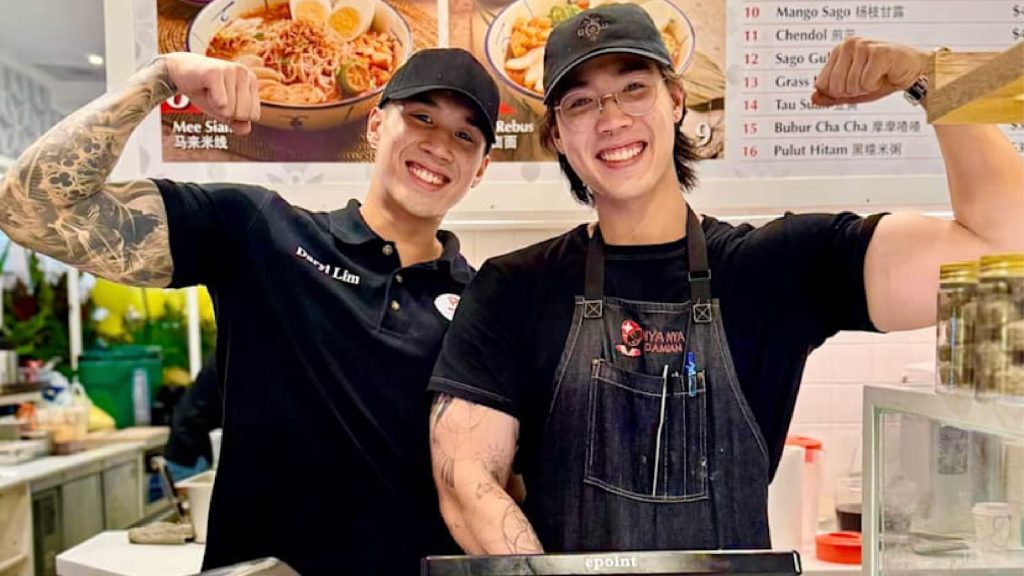
Business – Latest Singapore News & Updates | About Singapore https://about.sg Wed, 04 Feb 2026 13:01:59 +0000 en-US hourly 1 https://wordpress.org/?v=7.1.3 https://about.sg/wp-content/uploads/2024/08/cropped-Favicon-About-SG-min-32x32.png Business – Latest Singapore News & Updates | About Singapore https://about.sg 32 32 Peranakan Food Stall at Wisma Atria Goes Viral with Nonya Laksa and Family Culinary Legacy https://about.sg/peranakan-food-stall-wisma-atria-nonya-laksa/ Wed, 04 Feb 2026 12:53:08 +0000 https://about.sg/?p=2337 A newly opened Peranakan food stall Wisma Atria is quickly becoming one of Orchard Road’s most talked-about dining spots. The stall, known as Nya Nya, is drawing long queues not only for its traditional Peranakan dishes but also for the charismatic brothers who run it. Located inside Food Republic at Wisma Atria, the stall has captured attention on social media and among food lovers looking for authentic Nonya flavours in the heart of Singapore’s shopping district.

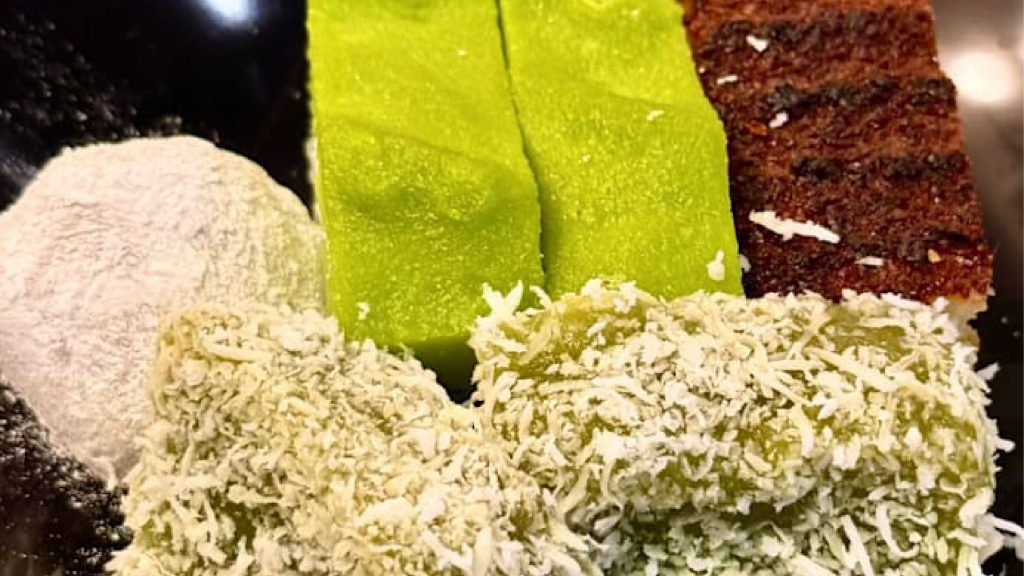
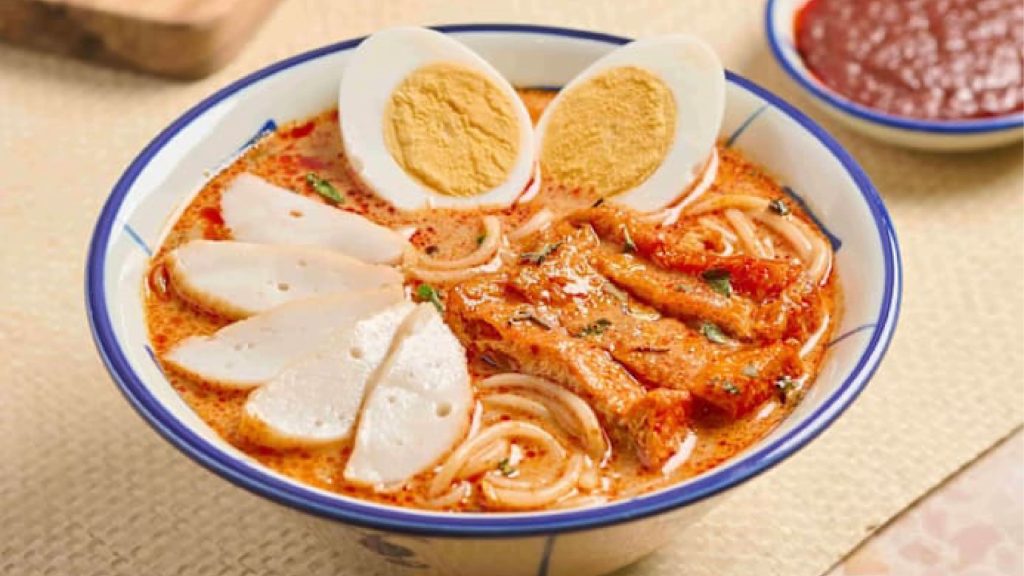
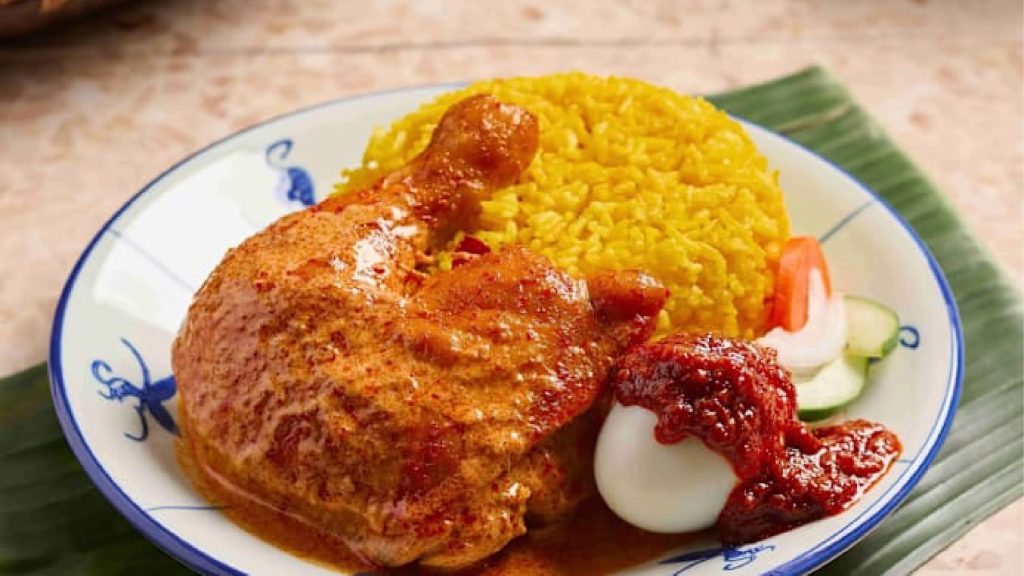
Nya Nya serves classic Peranakan favourites such as nonya laksa, nasi kunyit, ayam tempra, and traditional kueh. The stall opened on January 1 and occupies a space previously held by a popular café brand, signalling the growing demand for heritage cuisine in modern food courts.

A Third-Generation Peranakan Family Business

Peranakan Food Stall at Wisma Atria Goes Viral with Nonya Laksa and Family Culinary Legacy

Behind Nya Nya are brothers Daryl Lim and Damian Lim, who represent the third generation of a family deeply rooted in Singapore’s Peranakan food scene. Their grandmother founded the family’s original Peranakan food kiosk in 1980, which later became a cult favourite among locals. Their father took over the business in the 1990s, and now the younger generation is expanding the family legacy with new concepts and locations.

The opening of Nya Nya marks a significant milestone for the family. After decades of operating a single kiosk, the family finally had enough manpower to expand, with all siblings contributing in different ways, from cooking and customer service to marketing and operations.

Social Media Buzz and Customer Curiosity

While the food is the main attraction, the brothers’ presence behind the counter has sparked widespread interest online. Customers frequently share photos and videos of the stall, and many visitors admit they discovered Nya Nya through social media content.

The viral attention highlights how modern F&B businesses can benefit from personality-driven branding and organic social media exposure. In today’s digital landscape, charismatic founders and visually appealing stalls can significantly boost foot traffic and brand recognition.

Signature Dishes That Keep Customers Coming Back

Peranakan Food Stall at Wisma Atria Goes Viral with Nonya Laksa and Family Culinary Legacy

Nya Nya’s menu focuses on comforting Peranakan classics with strong nostalgic appeal. One of the most popular dishes is nasi kunyit, served with fragrant turmeric rice, curry chicken, and fresh salad. This dish is closely tied to the brothers’ childhood memories, as the aroma of turmeric rice was a staple in their family kitchen.

Another crowd favourite is nonya laksa, known for its rich coconut-based broth, aromatic spices, and generous toppings. The stall also offers traditional Peranakan kueh such as kueh salat and ondeh-ondeh, which are prepared using family recipes and traditional techniques.

Despite long queues during peak hours, the waiting time is relatively short, averaging around 10 to 15 minutes. This efficiency is due to streamlined kitchen operations and a menu designed for quick service without compromising on flavour.

Balancing F&B Work and Personal Discipline

Running a food stall in Singapore is physically demanding, especially with long operating hours and manual preparation. The brothers start their day early, preparing ingredients and managing operations until late evening. They also assist with preparing traditional kueh after closing hours, reflecting the labour-intensive nature of Peranakan food.

To maintain their fitness and stamina, they follow strict workout routines and dietary plans. This discipline underscores the demanding lifestyle of modern F&B entrepreneurs, who often juggle long hours with personal health and family commitments.

Education, Experience, and Culinary Skills

Peranakan Food Stall at Wisma Atria Goes Viral with Nonya Laksa and Family Culinary Legacy

Both brothers bring different experiences to the family business. One brother entered the family trade full-time after National Service, while the other studied real estate and gained culinary experience in various restaurants, including fine-dining establishments. This blend of traditional family knowledge and modern culinary training contributes to the stall’s unique positioning.

Peranakan food is known for its complexity and reliance on intuition rather than strict measurements. This culinary heritage requires years of hands-on learning, making family-run Peranakan businesses particularly valuable in preserving traditional techniques.

Family Values and Business Expansion Plans

Family plays a central role in the Nya Nya brand. Parents, siblings, and even the grandmother contribute to the business in different capacities. This multigenerational involvement strengthens authenticity and brand storytelling, which are increasingly important for modern consumers.

Nya Nya is already planning expansion, with additional outlets scheduled to open in other locations across Singapore. This growth strategy reflects rising demand for Peranakan food and the potential for heritage food brands to scale in urban food courts and malls.

Why Peranakan Food Is Trending Among Younger Consumers

Peranakan Food Stall at Wisma Atria Goes Viral with Nonya Laksa and Family Culinary Legacy

Peranakan food stall Wisma Atria is experiencing renewed popularity among younger diners. Social media, food reviews, and heritage storytelling have revived interest in traditional dishes. Younger consumers value authenticity, nostalgia, and cultural identity, making Peranakan food a compelling choice in Singapore’s multicultural dining scene.

Food courts and malls are also evolving to include curated heritage brands, allowing traditional cuisines to reach broader audiences without losing their cultural roots.

Conclusion

Nya Nya at Wisma Atria is more than a viral food stall. It represents the modern evolution of a heritage family business, blending tradition, social media influence, and contemporary food court culture. With its popular nonya laksa, nostalgic nasi kunyit, and handmade kueh, the stall is poised to become a staple for Peranakan food lovers in Singapore. As the brand expands, it highlights how traditional food businesses can thrive in modern retail environments while preserving cultural heritage.

]]>
Is Yahoo Still Worth It in 2026? https://about.sg/is-yahoo-still-worth-it-in-2026/ Mon, 02 Feb 2026 06:13:28 +0000 https://about.sg/?p=2319 For many marketers today, Yahoo feels like a relic of the early internet era — a brand often mentioned in the same breath as “obsolete platforms.” When budget discussions happen, Yahoo Ads is usually one of the first channels to be cut.

But is that assumption still valid in 2026?

The more important question is not whether Yahoo can compete head-to-head with Google or Meta — it clearly doesn’t. The real question is whether Yahoo still has strategic value, especially for businesses operating across Asia, including Singapore.

The Misconception: “Yahoo Is Dead”

Yahoo no longer dominates tech headlines or marketing trend reports. As a result, many decision-makers assume:

  • No one uses Yahoo anymore

  • Traffic quality is low

  • Advertising performance is outdated

In reality, Yahoo never fully disappeared. It evolved quietly into a content, data, and advertising network, spanning search, native, display, and programmatic inventory.

In some markets, Yahoo may be marginal. In others, it is still very relevant.

What Yahoo Advertising Looks Like Today

Yahoo advertising in 2026 generally includes:

1. Search Advertising

Lower volume than Google, but also significantly lower competition. In some verticals, Yahoo search ads still deliver efficient CPCs due to reduced auction pressure.

2. Display & Native Ads

Yahoo’s strength lies in:

  • News and editorial environments

  • Finance, business, and lifestyle content

  • Native ad formats that blend into content consumption

These placements work best for awareness, consideration, and mid-funnel campaigns.

3. Programmatic & Syndicated Inventory

Many advertisers already buy Yahoo inventory indirectly through DSPs — often without realizing it. This makes Yahoo less visible, but not irrelevant.

Yahoo Japan: Still Strong and Often Overlooked

While Yahoo’s relevance varies by region, Yahoo Japan remains a major exception.

Even today, Yahoo Japan continues to:

  • Attract massive daily traffic

  • Dominate news, finance, and portal-style browsing

  • Play a key role in search and display advertising

Unlike other markets where Yahoo faded, Yahoo Japan retained user trust and habitual usage. For businesses targeting Japanese consumers — or regional companies expanding into Japan — ignoring Yahoo Japan is often a strategic mistake.

This matters even for non-Japan advertisers, because it highlights a broader truth:

Yahoo’s strength is not global uniformity, but market-specific dominance.

Why This Matters for Singapore Businesses

Singapore acts as a regional hub for many APAC companies. Marketing decisions made in Singapore often influence campaigns across:

  • Southeast Asia

  • East Asia

  • Global English-speaking markets

For Singapore-based businesses, Yahoo can play three strategic roles:

1. Regional Diversification

Relying solely on Google and Meta creates platform dependency. Yahoo offers an alternative inventory source that can reduce risk.

2. Cross-Border Campaigns

Businesses expanding into markets like Japan — or targeting older, information-driven audiences — may find Yahoo surprisingly effective.

3. Cost Efficiency for Awareness

Yahoo can support upper- and mid-funnel objectives at lower CPMs, especially for brands that already dominate performance channels.

For Singapore businesses thinking regionally, Yahoo should not be dismissed as “irrelevant” — it should be evaluated selectively.

Cost, Competition, and Performance Reality

Compared to major platforms:

  • Yahoo generally has lower CPCs and CPMs

  • Competition is weaker

  • Scale is more limited

This makes Yahoo unsuitable for aggressive performance campaigns, but potentially useful for:

  • Brand awareness

  • Content promotion

  • Market entry testing

Performance depends heavily on creative quality and audience alignment, not the platform alone.

When Yahoo Advertising Makes Sense

Yahoo is worth considering if:

  • You operate across multiple Asian markets

  • Your audience consumes news, finance, or long-form content

  • You want to diversify media spend

  • You already maximize Google and Meta performance

It works best as a supporting channel, not a primary growth engine.

When Yahoo Is Not Worth It

Yahoo is usually not ideal if:

  • You target Gen Z or trend-driven users

  • You need immediate, high-volume conversions

  • Your campaigns are purely ROAS-driven

  • You lack strong creatives or content

Using Yahoo without the right expectations often leads to disappointment.

Strategic Perspective: Platforms Don’t Fail — Strategies Do

The biggest mistake marketers make is asking: “Is this platform good or bad?”

A better question is: “Does this platform fit my audience, market, and objective?”

Yahoo is not outdated — it is unevenly relevant.

In markets like Japan, it remains powerful. For Singapore-based businesses operating regionally, it can still be useful when applied strategically.

Final Verdict: Is Yahoo Still Worth It in 2026?

Yes — with context.

Yahoo is no longer a default choice, but it is far from useless. For brands that understand regional behavior, funnel stages, and media diversification, Yahoo can still deliver value.

In digital marketing, the most expensive mistake is not testing an “old” platform — it’s ignoring one without understanding where it still wins.

]]>
Cooked Pet Food in Singapore: 5 Stores That May Make You Ditch Kibble for Good https://about.sg/cooked-pet-food-in-singapore/ Fri, 26 Dec 2025 15:24:48 +0000 https://about.sg/?p=2234

Pet nutrition in Singapore is going through a quiet but powerful transformation. What used to be an occasional indulgence for pampered pets has now become a conscious, everyday choice for many pet owners. Cooked pet food is no longer just about spoiling dogs and cats. It is increasingly seen as a practical way to support pets through different life stages, sensitivities and health conditions, without adding stress to already busy schedules.

For many owners, the idea of home-cooking every meal for a pet sounds ideal but unrealistic. Long working hours and packed routines make daily meal prep difficult. This is where ready-to-serve cooked pet food steps in, offering a balance between nutrition, convenience and peace of mind.

Cooked pet food is typically formulated to meet recognised nutritional standards, uses human-grade ingredients, avoids unnecessary preservatives and is gently cooked to preserve nutrients. These factors are driving more Singaporeans to rethink kibble and explore fresh alternatives.

If you are curious about making the switch, here are five Singapore-based cooked pet food stores that stand out for their approach, philosophy and commitment to quality.

Why Cooked Pet Food Is Gaining Popularity in Singapore

Cooked Pet Food in Singapore: 5 Stores That May Make You Ditch Kibble for Good

The growing interest in cooked pet food reflects how owners now view pets as family members rather than animals to be fed with the bare minimum. Cooked meals are often designed to be complete and balanced, supporting digestion, skin health, mobility and long-term wellness.

Many brands also focus on transparency, clearly explaining ingredient sources, cooking methods and nutritional profiles. This reassurance is especially appealing for owners of pets with allergies, ageing issues or chronic conditions.

Another key reason is convenience. Meals are delivered ready to serve, removing the need for meal planning, portioning or supplement guesswork.

Frash Fresh: East Meets West in Pet Nutrition

Frash Fresh takes a distinctive approach by blending Traditional Chinese Medicine concepts with modern nutritional science. Their recipes are inspired by the idea of balancing yin and yang, using ingredients that support a pet’s internal harmony.

Cooling and warming components are carefully paired, such as kelp powder for inflammation support and cod liver oil for circulation. This holistic philosophy is complemented by their NutriAbsorb blend, which includes vitamins, enzymes and prebiotics to improve nutrient absorption.

Meals are chunky in texture, offering a more satisfying chew while retaining nutritional value. Frash Fresh focuses on gentle cooking and human-grade ingredients, making it a popular choice for owners seeking a more natural and balanced diet for both dogs and cats.

More info on https://frashfresh.com/

PetCubes: Designed for Every Life Stage

PetCubes is built around the idea that pets’ nutritional needs change as they grow older. Their gently cooked meals are tailored to different life stages, from energetic puppies and kittens to seniors who require easier digestion and added joint support.

Within the same protein range, recipes are adjusted to suit growth, maintenance or ageing needs. This makes it easier for owners to stay consistent with a brand while adapting to their pet’s development.

PetCubes also offers veterinary support diets for pets with specific health concerns. Their feline support meals are formulated for cats with kidney, bladder and urinary tract issues, providing reassurance for owners managing long-term conditions.

The brand’s modular packaging adds another layer of convenience, allowing meals to be thawed and served without mess or complicated portioning.

More info on https://petcubes.com/

Bom Bom: Precision Nutrition Through Customisation

Bom Bom, short for Bones Offal Meat, focuses on highly personalised nutrition. Their meals are designed to be complete and balanced, removing the need for additional supplements.

A key differentiator is their use of sous vide cooking, where meals are vacuum-sealed and cooked slowly at low temperatures. This method helps preserve moisture, flavour and nutrients, resulting in meals that are both wholesome and appealing.

What truly sets Bom Bom apart is its proprietary nutrition analyser, Bom Bom IQ. By factoring in a pet’s age, weight, activity level, allergies and health conditions, the system creates a customised meal plan. This is especially helpful for pets dealing with issues such as digestive sensitivities, skin conditions or joint problems.

More info on https://www.bombom.com/

Floof: Freshness as a Core Philosophy

Floof places freshness at the centre of its brand promise. Meals are prepared only when ingredients arrive, then vacuum-sealed and delivered within a short window to maintain quality.

Unlike many cooked pet food brands, Floof delivers meals chilled or at room temperature instead of frozen. This approach appeals to owners who want their pets to enjoy food that feels closer to freshly prepared home meals.

Floof’s recipes focus on simplicity, avoiding additives, fillers and preservatives. The result is a straightforward option for owners who prioritise freshness and minimal processing in their pet’s diet.

More info on https://floof.sg/

Furry’s Kitchen: Simple Recipes with Quality Proteins

Furry’s Kitchen specialises in small-batch, freshly cooked meals made with high-quality protein cuts rather than by-products. Their recipes often feature single proteins paired with vegetables and grains, making them suitable for pets with sensitivities.

The brand also offers more unusual protein options such as crocodile, kangaroo and venison, which can be beneficial for dogs with allergies to common meats. While the range for cats is more limited, the recipes are formulated to support energy needs and overall health.

Furry’s Kitchen appeals to owners who value ingredient transparency and a clean, uncomplicated approach to cooked pet food.

More info on https://furryskitchen.sg/

Is It Time to Switch from Kibble?

Cooked Pet Food in Singapore: 5 Stores That May Make You Ditch Kibble for Good

Choosing cooked pet food is not about following a trend but about aligning nutrition with a pet’s specific needs and lifestyle. For some pets, cooked meals may improve digestion, coat condition or overall vitality. For owners, the convenience and clarity offered by these brands can simplify feeding routines.

As more Singapore-based providers raise the bar in pet nutrition, cooked pet food is becoming less of a luxury and more of a practical everyday choice. For many, that is reason enough to reconsider what goes into the bowl.

]]>
Coursera–Udemy Merger Signals New Phase in Online Learning Industry https://about.sg/coursera-udemy-merger-signals-new-phase-in-online-learning-industry/ Thu, 18 Dec 2025 15:47:39 +0000 https://about.sg/?p=2185 The global online education industry is entering a new chapter as consolidation accelerates and platforms look for sustainable growth beyond the pandemic boom. In a move that has caught the attention of investors and corporate learning leaders alike, Coursera has announced plans to acquire Udemy in an all-stock transaction. The deal will create a combined company valued at approximately 2.5 billion dollars, with a clear strategic focus on workforce reskilling and artificial intelligence training.

This acquisition reflects how digital education providers are repositioning themselves in response to changing market conditions, tighter investor expectations, and rising demand for job-ready skills.

Deal Overview and Valuation Details

Under the proposed agreement, Udemy shareholders will receive 0.8 shares of Coursera for each share they hold. Based on recent market prices, the offer values Udemy at roughly 930 million dollars and represents a premium of more than 18 percent over its previous trading price.

Following the announcement, the market reacted swiftly. Coursera shares climbed modestly, while Udemy’s stock saw a sharp jump, reflecting investor optimism around the transaction. According to calculations cited by Reuters, the implied price per Udemy share stands at about 6.35 dollars.

The companies expect the transaction to close in the second half of next year, subject to regulatory clearance and shareholder approval.

Why Coursera and Udemy Are Joining Forces

At the heart of this deal is a shared belief that scale matters in today’s online learning market. After a surge in demand during the pandemic, growth has slowed, competition has intensified, and investors have become more selective about profitability and long-term value.

By combining forces, Coursera and Udemy aim to strengthen their position in corporate and enterprise training, especially in high-demand areas such as artificial intelligence, data science, and software development. Employers across industries are investing heavily in reskilling programs as generative AI reshapes job roles and required competencies.

A larger, more diverse platform allows the combined company to offer both structured academic pathways and flexible, skills-based courses, meeting the needs of enterprises at different stages of digital transformation.

Complementary Business Models Create Strategic Fit

One reason analysts see logic in the acquisition is the complementary nature of the two platforms. Coursera is known for partnering with universities and institutions to deliver degree programs, professional certificates, and structured learning tracks. Its strength lies in credibility, accreditation, and long-term learning outcomes.

Udemy, by contrast, operates a marketplace model where independent instructors offer individual courses across a wide range of practical and technical topics. Its content is often more tactical, fast-moving, and aligned with immediate workplace needs.

According to Stephen Sheldon, an analyst at William Blair, the deal makes sense both strategically and financially. Stephen Sheldon noted that the two companies bring complementary content and solutions, while also offering opportunities for cost synergies due to overlapping markets and customers.

Focus on Enterprise and AI Upskilling

A major driver behind the acquisition is the growing importance of enterprise learning. Both companies see corporate clients as a more stable and scalable revenue source compared to individual learners.

Artificial intelligence training has emerged as a particularly attractive opportunity. As companies race to adopt AI tools, they face a widening skills gap among employees. Online learning platforms that can deliver relevant, up-to-date training at scale are well positioned to benefit.

By combining Coursera’s academic partnerships with Udemy’s instructor-led marketplace, the merged entity aims to become a one-stop destination for AI and digital skills training, from foundational concepts to advanced, role-specific applications.

Investor Caution Still Looms Over EdTech

Despite the strategic rationale, investor sentiment toward online education remains cautious. Many edtech stocks continue to trade well below their post-IPO highs, reflecting concerns about competition, pricing pressure, and uncertain returns on AI-related investments.

Udemy shares have fallen significantly over the past year, while Coursera has also seen its valuation decline, albeit to a lesser extent. The merger can be seen as a response to these pressures, as scale and operational efficiency become increasingly important in winning back investor confidence.

What This Means for the Future of Online Learning

The proposed acquisition highlights a broader trend toward consolidation in the online education sector. As the market matures, smaller or standalone platforms may struggle to compete without clear differentiation or strong enterprise relationships.

For learners and businesses, the merger could lead to more comprehensive offerings, improved technology, and better integration between academic credentials and practical skills training. For the industry, it marks a shift from rapid expansion to a more disciplined focus on profitability, relevance, and long-term impact.

If successfully executed, the Coursera–Udemy deal could redefine how online learning platforms serve the global workforce in an AI-driven economy.

]]>
Loca Niru Opens at the 140-Year-Old House of Tan Yeok Nee: A Fusion of Heritage and Fine Dining https://about.sg/loca-niru-opens-at-the-140-year-old-house-of-tan-yeok-nee/ https://about.sg/loca-niru-opens-at-the-140-year-old-house-of-tan-yeok-nee/#respond Wed, 29 Oct 2025 13:08:26 +0000 https://about.sg/?p=2112 Singapore’s newest fine dining destination, Loca Niru, is set to open its doors on November 6, introducing diners to a unique blend of French finesse, Japanese artistry, and Southeast Asian flavour inspiration. Housed in the House of Tan Yeok Nee—Singapore’s oldest surviving Chinese mansion—Loca Niru marks the first time in 140 years that this historic Teochew residence will be open to the public.

A Historic Landmark Reimagined

Standing proudly along Penang Road, across from Istana Park, the House of Tan Yeok Nee has witnessed Singapore’s transformation from a trading port to a global city. Built around 1885 by businessman Tan Yeok Nee, the mansion is the last of the “Four Grand Mansions” of traditional Teochew architecture in Singapore.

Over the decades, this building has taken on many lives—it once housed the Salvation Army, served as an orphanage for girls, functioned as a university campus, and even became home to a traditional Chinese medicine hall.

Now, after an extensive restoration, the mansion enters a new chapter as a lifestyle and dining destination, allowing the public to finally experience its intricate courtyards, restored murals, and carefully preserved architectural details. A small heritage gallery on-site showcases the mansion’s legacy, while upstairs, diners will discover the culinary world of Loca Niru.

Loca Niru: Where East Meets West in Harmony

Perched on the second floor, Loca Niru is the creative vision of Chef Shusuke Kubota, formerly of Omakase At Stevens. With training in French gastronomy and roots in Japan’s Nagano region, Kubota brings together refined techniques from Europe and Asia—infused with the flavours and produce of Southeast Asia.

At its core, Loca Niru’s menu is about balance and respect—for culture, for tradition, and for the craft of cooking. “Because I live in Singapore, I wanted to use Southeast Asian ingredients,” Kubota shared. “Loca Niru is a bit contemporary, a bit fusion, but the base is French and Japanese techniques. You can feel the Frenchness, the Japanese delicacy, and the Southeast Asian vibrancy all in one plate.”

The restaurant’s name itself embodies this philosophy. “Loca Niru” comes from the Zen idioms Hakuba Roka ni Iru and Hakucho Roka ni Iru, which describe a white horse stepping into a field of white reeds—a symbol of perfect harmony and coexistence.

Inside the Restored Teochew Mansion

Dining at Loca Niru is as much a visual experience as it is a culinary one. Guests can look out through original casement windows onto intricate roof ridges decorated with ceramic artwork depicting mythical creatures—crafted using centuries-old Teochew inlaying techniques.

Every corner of the restaurant tells a story of heritage meeting modern refinement. While the exterior preserves its traditional grandeur, the interiors of Loca Niru are minimalist and elegant, creating a calm setting that lets the food and the architecture take centre stage.

A Journey Through Flavours: Loca Niru’s Signature Menu

Loca Niru’s eight-course tasting menu, priced at S$298++, begins with a creative interpretation of the traditional Japanese hassun course. This first act features a trio of intricate bites:

  • Sweet prawn tartare with pomelo served in a tart shell

  • Cured sturgeon and Oscietra caviar presented in a crispy pie tee shell

  • Fried frog roll with curry leaf aioli

Each bite offers a nod to different culinary traditions, setting the stage for a meal defined by contrast and connection.

The seafood course is one of Chef Kubota’s most talked-about dishes: pan-seared Japanese grunt fish paired with scallop mousse-stuffed zucchini flower and finished with a delicate Nyonya beurre blanc. This sauce, a refined reinterpretation of Peranakan rempah flavours, reflects Kubota’s deep respect for local cuisine—his way of paying homage to Singapore’s food heritage through French precision.

Another highlight is the buah keluak bun, a soft, chewy creation meant to soak up the rich sauces. “Many chefs use buah keluak in dessert because it’s chocolatey,” Kubota noted. “I wanted to do something different.”

The meal continues with inventive dishes like steamed dumpling in kombu and milk foam, featuring a medley of Southeast Asian vegetables including burdock, jicama, yacon, tomatillo, and Savoy cabbage from Malaysia.

Dessert is equally thoughtful—a light composition of shine muscat grape and kedongdong jelly topped with coconut mousse, an ode to the tropical essence of the region.

The Philosophy Behind the Plate

Chef Kubota’s approach to cuisine mirrors the building that houses his restaurant: both are about respecting the old while creating something new. He explains that the restaurant’s concept couldn’t lean too heavily into any one tradition. “The exterior looks very Chinese,” he said. “If I go too Teochew, it doesn’t make sense because I’m Japanese. But if I go too Western, it also doesn’t fit. So the idea is to find balance—to create something that feels new yet familiar.”

This philosophy of coexistence through creativity lies at the heart of Loca Niru. It is not simply a restaurant—it is a cultural bridge, a place where architectural heritage, culinary innovation, and artistic vision intersect.

A New Chapter for the House of Tan Yeok Nee

When Loca Niru opens on November 6, it will mark a significant moment for Singapore’s cultural and culinary scene. For the first time in over a century, visitors will be able to step into the House of Tan Yeok Nee not just to admire its architecture, but to experience it as a living, breathing part of modern life.

From the grandeur of its history to the intimacy of its dining rooms, Loca Niru invites guests to slow down, appreciate the details, and taste the dialogue between past and present.

Location and Opening Details

Restaurant Name: Loca Niru
Opening Date: November 6, 2025
Location: House of Tan Yeok Nee, 101 Penang Road, Singapore
Tasting Menu: S$298++ (Eight-course experience)

]]>
https://about.sg/loca-niru-opens-at-the-140-year-old-house-of-tan-yeok-nee/feed/ 0
A’zone: The Timeless Legacy of Singapore’s Beloved Lecture Pads https://about.sg/azone-the-timeless-legacy-of-singapores-beloved-lecture-pads/ https://about.sg/azone-the-timeless-legacy-of-singapores-beloved-lecture-pads/#respond Fri, 17 Oct 2025 16:29:11 +0000 https://about.sg/?p=2099 In a world that’s quickly turning digital, one Singapore brand continues to keep the beauty of paper alive. A’zone Corporation, a name familiar to generations of students, proves that tradition, quality, and love for craftsmanship can still stand strong in an era of screens and styluses.

For founder Bernie Lee, the journey has always been about more than just paper. It’s about passion, purpose, and leaving behind a meaningful legacy — one sheet at a time.

From Printing Agent to Paper Pioneer

Inside a modest industrial building in Loyang, the hum of machines fills the air. Pallets of paper freshly shipped from Austria line the factory floor, waiting to be transformed into the lecture pads and notebooks that have become staples in Singaporean classrooms for decades.

This is where A’zone’s story continues every day — a story that began more than forty years ago with a simple dream.

Bernie Lee, now 69, started his career as a printing agent before venturing into stationery manufacturing in the late 1970s. His entrepreneurial spirit led him to open Dawn-Bernie Office Supplies at the old Plaza Hotel, a time when Singapore’s business environment was flourishing.

“I was always fascinated by paper,” Lee once said. “During our youth, we were drawn to beautiful stationery from Japanese stores. I wanted to create my own.”

In 1979, he took that passion further and began producing his own line of stationery. The first success came with Besform, a brand of business forms that stood for “the best of all forms.” It was followed by a product that would define a generation — the Paperpoint lecture pad

A Brand Synonymous with School Memories

If you grew up in Singapore in the 1980s or 1990s, chances are you’ve used an A’zone lecture pad. The distinctive designs of Paperpoint, Save the Planet, and Scream City are etched in memory for many who once tore out foolscap sheets for exams or doodled on margins during long school days.

For Lee, these designs were more than products — they were reflections of the times.

In the 1990s, when youth culture was loud and expressive, Scream City captured that rebellious energy. Meanwhile, Save the Planet was a heartfelt response to the growing environmental awareness of the era.

“When kids carried these to school, they felt proud,” Lee said. “Each pad told a story of its generation.”

By 1989, the company officially became A’zone Corporation, a name chosen to represent ambition — from A to Z, the goal was to be the top.

Innovation Rooted in Consumer Insight

What sets A’zone apart isn’t just nostalgia. It’s a deep understanding of consumer needs.

When asked how his products stood out among thousands of stationery brands, Lee’s answer was simple: “Focus on the consumer.”

For businesses, that meant practical features like No Carbon Required (NCR) paper for easier documentation. For students, it meant lecture pads that flipped from the side — a design that improved usability and comfort during note-taking.

Even today, the Paperpoint and Save the Planet pads remain bestsellers, proof that thoughtful design never goes out of style.

Navigating Change in a Digital World

Still, Lee acknowledges that times have changed. With laptops, tablets, and styluses dominating classrooms and offices, paper use has declined drastically.

“It’s a sunset industry,” he admits. “People are using less paper, or none at all.”

But rather than give up, A’zone has evolved. The company now focuses on arts and crafts products, catering to parents and children who value creativity in a digital age.

Lee believes art requires something technology cannot replace — the touch of human hands. “Arts and crafts mean you use your talent, your mind, your hands,” he said. “Paper still has a role to play in that process.”

This shift inspired the creation of Monjojo, A’zone’s line of watercolor pads, sketchbooks, and drawing blocks. Launched after the pandemic, the Monjojo series reflects A’zone’s adaptability and understanding of new consumer trends

Keeping Production Local and Quality High

Despite challenges such as rising rental costs and manpower shortages, A’zone continues to manufacture about 70 percent of its products in Singapore. The remaining portion is produced in Malaysia, and Lee plans to gradually outsource more while keeping quality control firmly in hand.

“Our main market will always be Singapore,” he said. “It’s where we started, and where our story belongs.”

For Lee, expanding globally was never the goal. His focus remains on taking care of his company, his employees, and his family — values that define A’zone’s enduring legacy.

A Family Legacy That Lives On

Today, Bernie Lee’s son, Lee Jielong, stands ready to continue the family business. Like his father, he believes paper still holds a timeless value in education and creativity.

“You still have to write on paper to get the feel,” he shared. “Paper has that personal touch. Even if technology advances, learning to write and draw remains essential.”

The younger Lee’s belief echoes the same philosophy that has guided A’zone for more than four decades — that paper connects us in ways no screen can.

The Future of A’zone: A Legacy Written in Ink

Bernie Lee knows the road ahead won’t be easy. Competition is fierce, and technology moves fast. Yet he remains steadfast in his mission.

“In this business, it’s like musical chairs,” he said. “The weaker ones will lose their seat. We just hope to be the last one standing.”

For now, he continues to conceptualize and create new paper products — just as he did in the beginning.

“I’ll keep doing this,” he smiled. “Until I’m gone.”

A’zone’s story is not merely about paper. It’s about perseverance, creativity, and the belief that some legacies — like ink on a well-loved page — never fade.

]]>
https://about.sg/azone-the-timeless-legacy-of-singapores-beloved-lecture-pads/feed/ 0
Chick-fil-A Singapore: Inside the Inspiring 7-Month Journey of Its First Franchise Owner https://about.sg/chick-fil-a-singapore/ https://about.sg/chick-fil-a-singapore/#respond Wed, 15 Oct 2025 15:25:37 +0000 https://about.sg/?p=2093 Singapore is getting its first Chick-fil-A outlet — and the story behind it is one of perseverance, passion, and purpose.

When Singaporean F&B veteran Chyn Koh was selected as Chick-fil-A’s first-ever franchise operator in Asia, it wasn’t because of a hefty investment or powerful connections. Instead, it was his character, chemistry, and competency — the three values that the American fast-food giant prioritizes above all else.

And yes, while most global franchises require massive buy-ins, Chick-fil-A’s unique business model flips that idea on its head.

A Franchise Model Like No Other

While some global food chains focus on financial power, Chick-fil-A believes in personal integrity and long-term partnership.

For just S$15,000 (around US$11,500), a selected operator can open one of the world’s most famous chicken sandwich restaurants. But don’t be mistaken — this is not an easy ticket to entrepreneurship.

The selection process is rigorous and highly competitive. Koh had to go through seven interviews in seven months, outshining more than 700 other applicants to earn the right to open Singapore’s first Chick-fil-A.

“It wasn’t just about money,” Koh shares. “They wanted to truly understand who I am, my values, and how I could lead a team that represents Chick-fil-A’s brand of hospitality.”

From F&B Veteran to Franchise Visionary

At 49, Koh brings with him 17 years of experience running six Subway outlets in Singapore. But instead of staying comfortable, he decided to take a leap of faith.

“Nearing 50, I told myself I still have 20 years of energy left to do something great,” he says. “I wanted to show my son that it’s never too late to pursue something meaningful and build something long-lasting.”

His career in food and beverage started years earlier, working as an account manager at The Coca-Cola Company, where he managed partnerships with brands like Subway and 7-Eleven. That foundation gave him a deep understanding of operations, marketing, and people management — all vital skills for a Chick-fil-A operator.

What Makes Chick-fil-A’s Franchise Process So Different

At Chick-fil-A’s headquarters in Atlanta, Georgia, the recruitment process is famously selective. Only about 1% of applicants make it through.

Unlike typical franchises, Chick-fil-A funds most of the setup costs and doesn’t allow operators to own multiple locations. Instead, each operator focuses on one outlet, ensuring high standards of food, service, and community engagement.

“We don’t just want investors — we want partners,” says Lauren Howard, senior principal program lead at Chick-fil-A. “Our model is low-cost to enter, but high-commitment to operate. The operator must be hands-on and dedicated daily.”

Howard, who oversaw Koh’s hiring, adds that the process included online assessments, virtual interviews, and an in-person evaluation. Chick-fil-A even hosted a pop-up event in Singapore to gauge public response — and the enthusiasm was overwhelming.

Building More Than a Restaurant

For Koh, running Chick-fil-A isn’t just a business opportunity — it’s a mission to build a positive community hub.

He plans to hire 65 to 80 team members for the first Singapore outlet, far more than typical fast-food operations. “We overstaff to ensure quality service and to nurture future leaders,” he explains.

Promising employees may even have the chance to become future operators. “There are real skills to be learned here — communication, leadership, hospitality,” Koh adds. “Even if we don’t change lives, we can make someone’s day better every time they step into the restaurant.”

What to Expect from Chick-fil-A Singapore

Chick-fil-A’s Singapore outlet, set to open later this year, will stay true to the brand’s signature charm: clean interiors, fresh flowers on tables, and friendly service.

While prices are still being finalized, Singaporeans can look forward to an exclusive garlic chili sauce crafted for local palates — a nod to Singapore’s love for spice. Customers can also enjoy unlimited refills for drinks and multiple sauce options, including Chick-fil-A’s iconic smoky honey mustard-style signature sauce, ranch, and barbecue.

And yes — true to its heritage — the restaurant will close on Sundays, honoring founder Truett Cathy’s tradition that employees deserve a day of rest.

A Vision Rooted in Values

Koh’s story is more than a tale of business success. It’s a reminder that opportunities built on values, hard work, and community spirit still exist in today’s fast-paced world.

As Chick-fil-A prepares to open its doors in Singapore, one thing is clear: this isn’t just another fast-food chain expanding overseas. It’s the start of a movement that blends American hospitality with Singaporean heart.

And with leaders like Chyn Koh at the helm, Chick-fil-A Singapore isn’t just serving chicken sandwiches — it’s serving inspiration, one meal at a time.

]]>
https://about.sg/chick-fil-a-singapore/feed/ 0
Singapore’s F&B Scene: The Brutal Battlefield Forging Global Success Stories https://about.sg/singapores-fb-scene/ https://about.sg/singapores-fb-scene/#respond Mon, 06 Oct 2025 14:19:18 +0000 https://about.sg/?p=2070 Singapore’s food and beverage (F&B) industry is one of the most competitive in the world — a market where razor-thin margins, high rent, and labor challenges test even the boldest entrepreneurs. Yet, it is also a powerful launchpad for those who dare to dream beyond the island’s borders.

Amid the constant churn of closures and new openings, some Singapore-based businesses are turning their local struggles into international success stories. For many, thriving in Singapore has become the ultimate preparation for conquering the global stage.

From Telok Ayer to Bangkok: How Sarnies Brewed Global Success

When Sarnies Cafe opened its doors along Telok Ayer Street in 2011, the coffee culture in Singapore was just beginning to flourish. Surrounded by office towers and young professionals hungry for artisan brews, Sarnies became an instant hit.

But within just a few years, rising rents and tightening labor regulations began to erode profits. By 2015, co-founders Benjamin Lee and Eric Chan knew they had to look beyond Singapore to sustain growth.

Their search led them to Bangkok, where they opened a modest coffee bar in 2016. The Thai capital reminded them of Singapore’s early days — energetic, experimental, and ready for something new. After immersing themselves in the local market, they expanded into a heritage building and launched a full-fledged brunch café.

Today, Sarnies operates only two outlets in Singapore but boasts eight thriving locations in Bangkok, each uniquely designed for its neighborhood. Their success abroad highlights a powerful truth: mastering Singapore’s competitive scene can build the resilience needed to win internationally.

The Harsh Reality: Why Many Local Brands Struggle to Survive

Singapore’s F&B landscape is unforgiving. In 2024 alone, over 3,000 businesses shut down, the highest attrition rate in nearly two decades. Longstanding names like Ka-Soh, Burp Kitchen & Bar, and The Prive Group were among the casualties.

High rentals, labor shortages, and volatile ingredient prices make it difficult to maintain profitability, even for well-established operators. Chef Bjorn Shen of Artichoke describes the local scene as “a bloodbath,” where full-house restaurants can still lose money.

Yet, Shen and others see this as both a curse and a blessing. “If you can make it in Singapore,” he said, “you can make it anywhere.” The country’s discerning diners, strict regulations, and sky-high costs make it the perfect proving ground for F&B innovation.

Taking the Leap Abroad: From Survival to Expansion

For many brands, international expansion has become less of a choice and more of a necessity. Rising costs and fierce competition have forced business owners to look for opportunities overseas.

Entrepreneurs like Douglas Ng, founder of Fishball Story, found relief after moving operations to Indonesia, where he now runs six outlets under the Little Red Dot brand. Labor is more affordable, rent is lower, and customer bases are large enough to sustain multiple price points.

Similarly, dessert brand Awfully Chocolate and bakery giant BreadTalk Group have both adapted their concepts for overseas audiences. In China, Awfully Chocolate offers lighter, less sweet desserts. BreadTalk, meanwhile, customizes its menus to include 20 percent of local flavors in each market while keeping 80 percent of its Singaporean identity intact.

Their strategies prove that while localization is crucial, authenticity remains the core of international success.

The Government Push: Helping Local Brands Go Global

To support this wave of expansion, Enterprise Singapore (ESG) has assisted more than 700 F&B projects in overseas market explorations over the past three years.

According to Jason Lim, ESG’s Director of Food Services, Southeast Asia remains the most promising region for Singapore’s F&B exports. Countries like Indonesia and the Philippines offer larger consumer bases, lower operating costs, and a growing middle class eager for new dining experiences.

Academic experts agree that expanding abroad not only helps businesses diversify risks but also provides valuable insights that can later strengthen their Singapore operations.

Back to the Roots: Why Singapore Remains Home

Despite the exodus, most business owners still view Singapore as the heart of their brand identity.

“The success we have in Thailand wouldn’t be possible without what we learned in Singapore,” said Sarnies’ co-founder Benjamin Lee. Similarly, The Ice Cream & Cookie Co. continues to base its manufacturing and R&D in Singapore, even after launching in Hong Kong.

For these entrepreneurs, Singapore’s intense market pressure is both a challenge and a badge of honor. As Awfully Chocolate’s founder Lyn Lee puts it, “We will always be proudly Singaporean. The goal has always been to be Singapore’s chocolate brand — and then Asia’s.”

The Takeaway: Singapore’s Brutal Market Builds Global Champions

Singapore’s F&B scene is undeniably tough — but it also breeds excellence. The island’s high standards, demanding consumers, and fast-paced environment create brands capable of thriving anywhere.

For every closure, a new entrepreneur steps up, ready to take on the challenge. And while many eventually expand abroad, their roots — and their lessons — remain deeply grounded in Singapore.

In the end, the Republic’s unforgiving market is not a graveyard for dreams. It’s a training ground for world-class brands that carry the spirit of Singapore’s resilience, creativity, and taste to the global stage.

]]>
https://about.sg/singapores-fb-scene/feed/ 0
How a Former Teacher Turned Grief and Passion Into a Handmade Bag Brand That Sells Out in Minutes https://about.sg/how-a-former-teacher-turned-grief-and-passion-into-a-handmade-bag-brand/ https://about.sg/how-a-former-teacher-turned-grief-and-passion-into-a-handmade-bag-brand/#respond Mon, 06 Oct 2025 14:19:01 +0000 https://about.sg/?p=2068 In a world dominated by mass-produced fashion, one woman’s handcrafted creations are quietly redefining the meaning of luxury and authenticity. Every month, the bags from Rags to Peaches vanish from online shelves in minutes — sometimes even in just three. Behind this phenomenon is Tey Pei Hwa, a former English teacher whose journey from classroom to craft studio has inspired thousands across Singapore and beyond.

From Classroom to Creative Studio

Before becoming a full-time maker, Tey was an English Literature teacher, guiding students through words and worlds of imagination. But her own story took a turn in 2012, during a trip to Kyoto, Japan. Wandering through the Higashiyama district, she stumbled upon a small shop selling gamaguchis — vintage-style kiss-lock handbags that open with a gentle clasp.

“It felt magical,” she recalled. “There’s beauty in their simplicity — just a clasp, no zippers, no fuss.” That visit planted the seed for what would later become Rags to Peaches.

Over the years, Tey returned to Kyoto annually, buying gamaguchis and collecting fabrics — from cute animal prints to elegant kimono brocades. Her fascination with textiles, she believes, came from her parents, who once worked as tailors. “I grew up surrounded by fabrics and sewing machines,” she said. “I loved watching them transform something plain into something beautiful.”

Finding Purpose Through Loss

After marrying in 2016, Tey spent a year in London with her husband, who was pursuing his master’s degree. There, she enrolled in a full-time sewing course and began selling small handmade items online — early hints of her future path.

When she returned to Singapore, life brought both joy and heartbreak. She became a mother, but also experienced a devastating pregnancy loss in 2022. It was during this emotional chapter that sewing became her solace.

“I had so much love to give, but nowhere for it to go,” she said softly. “Sewing helped me channel that love into something tangible — something that carried meaning.”

The Rags to Peaches logo itself is a tribute to the daughter she lost: a little girl with two ponytails holding a teddy bear and a small gamaguchi, gazing into the distance. “Every time I look at it, I’m reminded of her,” Tey shared. “She lives on through my work.”

Building Rags to Peaches from Scratch

In 2020, Tey took a leap of faith. She made her first batch of 15 gamaguchi bags and listed them on Instagram. They sold out within minutes. Word spread quickly — not through advertisements or influencer campaigns, but through heartfelt customer testimonials.

Today, her monthly drops of 40 to 50 handmade bags sell out in less than 15 minutes. Some buyers set alarms just to secure one. Prices range from about S$80 for small pouches to S$295 for larger bags. Despite the high demand, she refuses to mass-produce.

“I could buy machines to make production faster,” she said, “but that would take away the soul of it. People can feel when something is made by hand — it’s a human connection that can’t be replicated.”

Each bag is meticulously cut, stitched, and framed by hand. Even the alignment must be perfect; a one-centimeter mistake could ruin the entire piece. “Gamaguchis are unforgiving,” she laughed. “But that’s what makes them special.”

Balancing Motherhood and Craft

Tey’s days begin at dawn. She works in her small Tai Seng studio from 7am until mid-afternoon before picking up her children from preschool. On weekends, she sews while they nap. It’s a delicate balance between entrepreneurship and motherhood — but one she deeply values.

“My son calls me a bag cobbler,” she joked. “I like that he sees me doing something different. I want my kids to know that success isn’t only about money — it’s about purpose, creativity, and joy.”

A Brand That Sparks Joy

What makes Rags to Peaches stand out isn’t just the quality of craftsmanship but the emotion stitched into every piece. Many customers write to Tey, sharing how her bags bring comfort during tough times or remind them of loved ones.

“It amazes me that something I make with my hands can bring joy to someone else,” she said. “Each piece carries a story — mine and theirs.”

A Stitch in Time, A Legacy in Fabric

Rags to Peaches isn’t just a handmade bag brand. It’s a testament to resilience, love, and the power of creating beauty from pain. From a small corner in Singapore, Tey Pei Hwa has shown that even in loss, there can be renewal — and that sometimes, the simplest clasp can hold the strongest emotions.

Her story is a gentle reminder that success doesn’t always come from scale or speed. Sometimes, it’s hand-sewn, one stitch at a time, with heart and purpose.

]]>
https://about.sg/how-a-former-teacher-turned-grief-and-passion-into-a-handmade-bag-brand/feed/ 0
Are AI Tutors Disrupting Singapore’s Billion-Dollar Tuition Industry? https://about.sg/are-ai-tutors-disrupting-singapores-billion-dollar-tuition-industry/ https://about.sg/are-ai-tutors-disrupting-singapores-billion-dollar-tuition-industry/#respond Fri, 26 Sep 2025 14:10:32 +0000 https://about.sg/?p=2051 The Rise of AI in Education

Singapore’s tuition industry is one of the most competitive and lucrative in the world, with families spending nearly S$1.8 billion on private tuition in 2023. Traditionally, parents have turned to tuition centres and private tutors to give their children a competitive edge in exams. But a new contender has emerged: AI-powered tutors.

Once a futuristic concept, AI tutors are now becoming mainstream. Platforms such as Tutorly, WizzTutor, and Geniebook are positioning themselves as more affordable, flexible, and accessible alternatives to conventional tuition classes. The question many parents and educators are now asking is simple: could AI fundamentally disrupt Singapore’s tuition ecosystem?

A Parent’s Perspective: From Traditional Tuition to AI Support

For years, parents like Ms Shubhada Jayant Bhide relied on established tuition centres. She recalls the time, effort, and money spent ferrying her daughter to classes. Today, her younger son Shrihaan enjoys a very different learning experience. Using an AI tutor, he receives academic support at home, instantly and at a fraction of the cost.

“It is such a gamechanger,” said Ms Shubhada, describing the platform as learning at her son’s fingertips. Her story reflects a larger trend — families seeking convenience without compromising academic support.

Why AI Tutors Appeal to Singapore Families

1. Cost-Effectiveness

Traditional tuition can be expensive. A single secondary-level class at a premium centre like The Learning Lab can cost up to S$172 per lesson. By contrast, AI platforms such as Tutorly charge S$49 per month, offering unlimited access to practice questions, explanations, and past exam papers. WizzTutor, which focuses on mathematics, costs S$74 per month, roughly the price of a daily coffee.

2. Flexibility and Accessibility

AI tutors are available anytime, anywhere. Students can ask questions at midnight, revise before exams, or catch up on missed concepts without waiting for the next class. For busy parents, this eliminates the need to schedule travel and waiting time.

3. Personalised Learning at Scale

AI tools adapt to student inputs, offering explanations and customised practice. While not yet perfect, many parents see these platforms as bridging the gap between costly one-on-one sessions and self-study.

Growth of AI Education Platforms in Singapore

The demand is undeniable. Tutorly has gained over 1,200 free users since launching in January, while WizzTutor attracted 800 users within its first few months. Established edutech company Geniebook, which combines physical branches with AI-powered tools, reported a 25 per cent year-on-year increase in usage.

This rapid growth suggests that AI tutors are more than a passing trend. They are being integrated into Singapore’s highly competitive education culture.

The Challenges of AI-Driven Learning

Despite the appeal, experts warn of potential pitfalls.

Risk of Shortcut Learning

AI tools can sometimes provide direct answers instead of guiding students through the process. As NUS lecturer Jonathan Sim explained, students may develop “shortcut thinking” and lose essential skills like analysis and independent judgment if they over-rely on bots.

Lack of Human Motivation

While AI can explain and drill practice questions, it cannot replicate a teacher’s encouragement, discipline, or ability to inspire. As Dr Wong Lung Hsiang of NIE notes, a good teacher does more than deliver knowledge — they guide mindset, perseverance, and confidence.

Parent and Teacher Involvement Still Key

Most experts agree that AI tutors work best when paired with human oversight. Some platforms are already building parent dashboards to monitor usage and encourage responsible learning habits.

Hybrid Models: The Likely Future of Tuition

Rather than replacing tuition centres entirely, AI tutors are expected to co-exist with human educators. Hybrid models may combine the affordability and accessibility of AI with the mentorship of in-person teachers. Geniebook, for example, is expanding both online and physical services to create a “symbiotic” approach.

This reflects a larger truth: while AI offers speed, scale, and convenience, the human touch remains irreplaceable in motivating and nurturing students.

Final Thoughts

The rise of AI tutors in Singapore is not just a passing phase — it is a real disruption to the billion-dollar tuition market. Parents are drawn to the affordability and flexibility, students enjoy the accessibility, and platforms are scaling fast.

Still, experts caution against treating AI as a magic solution. The best learning outcomes will likely come from a balanced approach, where AI supports students with instant feedback while teachers provide guidance, mentorship, and motivation.

For parents, this shift represents both an opportunity and a challenge. As Ms Shubhada summed up, “Now the ball is in the court of tuition centres. They have to give something AI doesn’t give.”

]]>
https://about.sg/are-ai-tutors-disrupting-singapores-billion-dollar-tuition-industry/feed/ 0