With competitive pricing, a broad product range, and strong brand visibility, BYD’s rise reflects not only the success of one manufacturer but also the rapid maturation of Singapore’s EV market.
BYD Tops New Car Registrations in 2025

BYD registered a total of 11,184 new vehicles in Singapore in 2025, giving it a commanding 21.2 per cent share of the 52,678 cars registered during the year. This means more than one in five new cars on Singapore roads now carries the BYD badge.
Toyota followed in second place with 7,466 new registrations, while BMW took third with 5,091 vehicles. Despite strong competition from both mass-market and premium brands, BYD’s numbers stood out clearly, underscoring its dominance in a rapidly evolving market.
Industry observers note that this achievement marks a significant shift, as Chinese car brands were once considered niche players in Singapore’s tightly regulated automotive sector.
EV Sales Surge to 45 Per Cent of New Registrations
The broader context behind BYD’s success is Singapore’s accelerating adoption of electric vehicles. In 2025, a record 23,684 EVs were registered, accounting for 45 per cent of all new cars sold. This represents a sharp increase from 2024, when EVs made up 34 per cent of new registrations.
By the end of 2025, the total number of electric vehicles on Singapore roads reached 49,262, or 7.4 per cent of the overall car population. Just a year earlier, EVs accounted for only 4 per cent, highlighting how quickly electrification is reshaping the transport landscape.
Government incentives, improved charging infrastructure, and growing consumer confidence have all contributed to this rapid growth.
Why BYD Is Winning Over Singaporean Buyers

Transport economists and industry experts point to several factors behind BYD’s strong performance. One of the most frequently cited reasons is value for money. Compared to traditional Japanese and Korean mass-market brands, Chinese EVs have gained a reputation for offering more features at competitive price points.
BYD’s extensive lineup is another key advantage. From compact sedans to SUVs and multi-purpose vehicles, the brand covers almost every popular car category in Singapore. This allows it to appeal to a wide range of buyers, from first-time car owners to families upgrading their vehicles.
In addition, BYD’s luxury sub-brand Denza has helped the group capture higher-end segments, bridging the gap between mass-market affordability and premium appeal. This dual-market strategy has strengthened brand perception and expanded its customer base.
Strong Branding and Aggressive Market Presence
Beyond product offerings, BYD’s marketing and distribution strategy has played a crucial role. The brand maintains a strong on-the-ground presence in Singapore, supported by multiple appointed dealers alongside its official distributor. This wide network improves accessibility, visibility, and after-sales confidence for buyers.
Globally, BYD’s reputation has also grown significantly. In 2025, the company overtook Tesla to become the world’s largest EV manufacturer by sales volume. BYD sold approximately 2.26 million EVs worldwide, compared to Tesla’s 1.64 million. This global success has reinforced trust among local consumers who may previously have been cautious about newer automotive brands.
In Singapore, Tesla remains the only other EV brand to feature in the top 10, with 3,476 new registrations last year.
Incentives and Buyer Urgency Fuel Demand
Another factor driving EV sales in 2025 was the impending reduction in government incentives. The EV adoption rebate was reduced from a maximum of S$40,000 in 2025 to S$30,000 in 2026. This change created a sense of urgency among consumers, encouraging many to secure their purchases before incentives decreased further.
Dealers observed a noticeable spike in showroom traffic as buyers rushed to take advantage of higher rebates, particularly for competitively priced models such as those offered by BYD.
Can BYD Maintain Its Market Leadership?
Looking ahead, industry experts believe BYD is well positioned to retain its lead in Singapore, at least in the near term. Its comprehensive product lineup, strong brand awareness, and economies of scale give it a significant advantage over newer entrants.
However, competition is expected to intensify. Japanese and Korean manufacturers are under pressure to introduce more affordable and feature-rich EVs to regain lost ground. At the same time, other Chinese EV brands are gradually entering the Singapore market, though they may need time to build trust and recognition comparable to BYD.
Ultimately, Singapore’s car market will continue to be influenced by global developments, as most automakers make strategic decisions based on international profitability rather than local market share alone.
What BYD’s Rise Means for Singapore Drivers
BYD’s ascent to the top of Singapore’s car sales rankings reflects a broader transformation in how consumers view electric vehicles. EVs are no longer niche or experimental. They are fast becoming the default choice for new car buyers.
For consumers, this increased competition brings more options, better features, and greater price transparency. For the industry, it signals that electrification is no longer a future goal, but a present reality.
]]>Bold Exterior Design with New Colour Themes
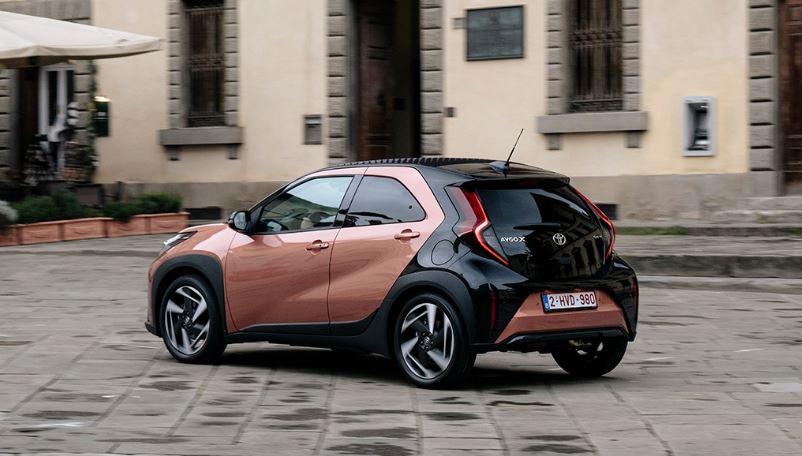
On the outside, the latest Aygo X adopts a bolder and more confident look. Its three-dimensional black front grille features Toyota’s signature double trapezoid design, paired with a slightly longer front overhang to create a more imposing stance. Depending on the variant, the Aygo X is fitted with 17- or 18-inch alloy wheels, complemented by black flared wheel arches that reinforce its crossover character.
Design refinements such as repositioned turn indicators on the side mirrors and the addition of power-folding mirrors add a more contemporary touch. Higher-spec grades are also equipped with full LED lighting at both the front and rear for a sharper, more modern appearance.
Toyota introduces a new “mellow spice” colour concept to give the Aygo X greater individuality. Four distinctive shades—Cinnamon, Jasmine, Tarragon, and Lavandula—are available on the Mid+ and High grades. These variants also feature striking bi-tone paintwork, with black extending seamlessly from the roof across the rear and down to the side sills, enhancing the car’s dynamic presence.
Smart and Spacious Interior for Urban Living
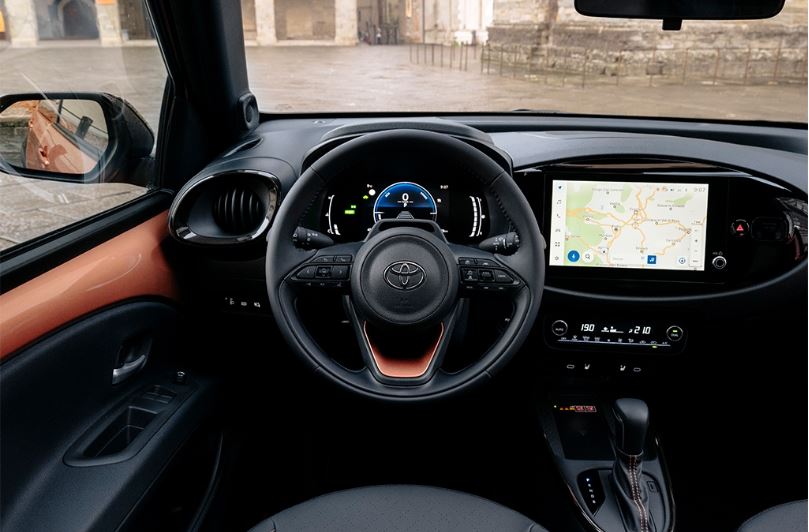
Despite its compact external dimensions, the Aygo X continues to maximise interior space. The elevated driving position offers excellent visibility, while the cabin comfortably seats up to four passengers. Practicality remains a key strength, with a 231-litre boot providing ample space for daily errands and weekend essentials.
The dashboard has been updated with a seven-inch digital instrument cluster and a redesigned heater control panel. A reshaped centre console now houses a new electronic parking brake, creating a cleaner and more user-friendly layout. The steering wheel is trimmed in high-quality artificial leather, and on High-grade models, it features a colour insert that matches the exterior. Premium seat finishes are available on both Mid+ and High grades, adding a more refined feel to the cabin.
Agile Handling and Refined Driving Experience
Built on Toyota’s GA-B platform under the Toyota New Global Architecture (TNGA), the Aygo X benefits from a low centre of gravity and a highly rigid body structure. This combination delivers nimble and responsive handling, making it well suited to navigating busy urban streets.
The introduction of full hybrid technology not only enhances driving efficiency but also contributes to a quieter and smoother journey, particularly when running in all-electric mode. Toyota has added seven new noise-damping components, including dashboard silencers, bonnet insulation, an engine underbody cover, and an updated exhaust system to reduce road and powertrain noise.
Mid+ and High grades benefit from additional sound insulation, such as thicker window glass and enhanced soundproofing throughout the body, further improving cabin comfort.
Hybrid Powertrain and New GR Sport Variant
Under the bonnet, the 2026 Aygo X features a 1.5-litre petrol engine paired with an electric motor, delivering a combined system output of 114bhp. This setup provides a balance of responsive performance and efficient urban driving.
For the first time, Toyota is also introducing a GR Sport variant of the Aygo X, offering a sportier look and a more engaging driving character for buyers seeking a more dynamic compact crossover.
]]>A Spacious, Cat A–Eligible SUV
The Leapmotor C10 measures 4,739mm in length and 1,680mm in height, putting it in the same size range as popular models like the Tesla Model Y. Its generous dimensions also make it one of the largest Cat A COE–eligible SUVs in the market — a key advantage for buyers looking for space without crossing into the higher COE category. Priced at $175,999, the C10 positions itself as a value-driven option in the increasingly competitive electric SUV segment.
Modern and Minimalist Design
The C10 embraces a sleek, contemporary design language. The front fascia features slim, modern headlights, while the rear is accented by a clean, streamlined light bar that enhances its visual width. Overall, the aesthetic leans toward minimalism, avoiding unnecessary embellishments for a more polished and refined look.
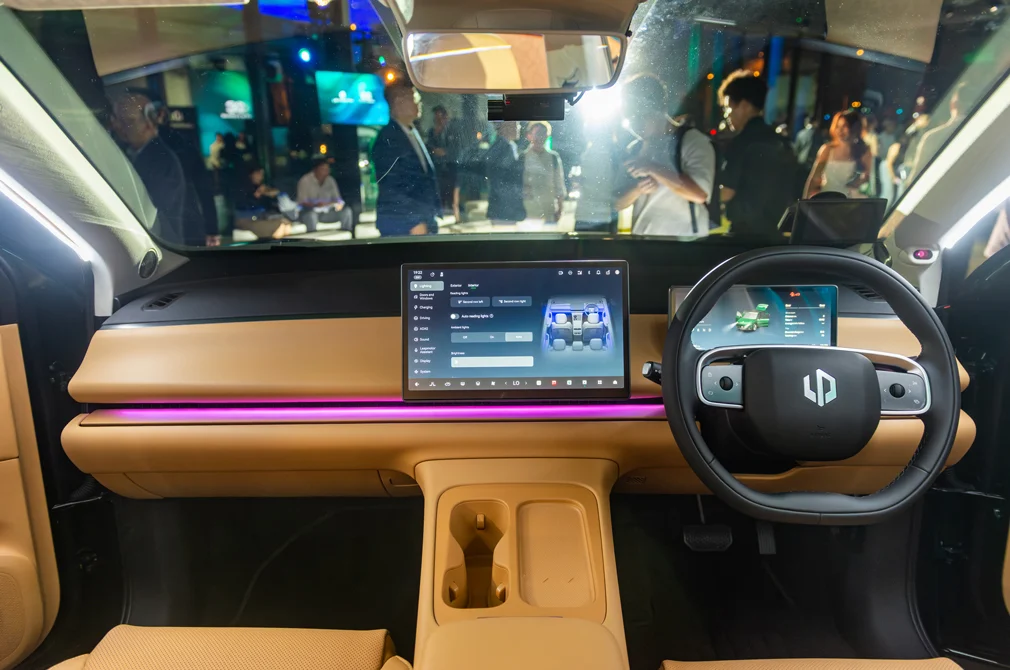
Inside, the cabin continues this design philosophy. Drivers are welcomed by a clutter-free space highlighted by soft-touch materials and modern trims. A 10.25-inch digital instrument panel provides essential driving information, while a large 14.6-inch central touchscreen controls the infotainment system, climate functions, and various vehicle settings. The interface is designed to be intuitive, ensuring drivers can navigate features with ease.
Comfort and Convenience Features That Impress
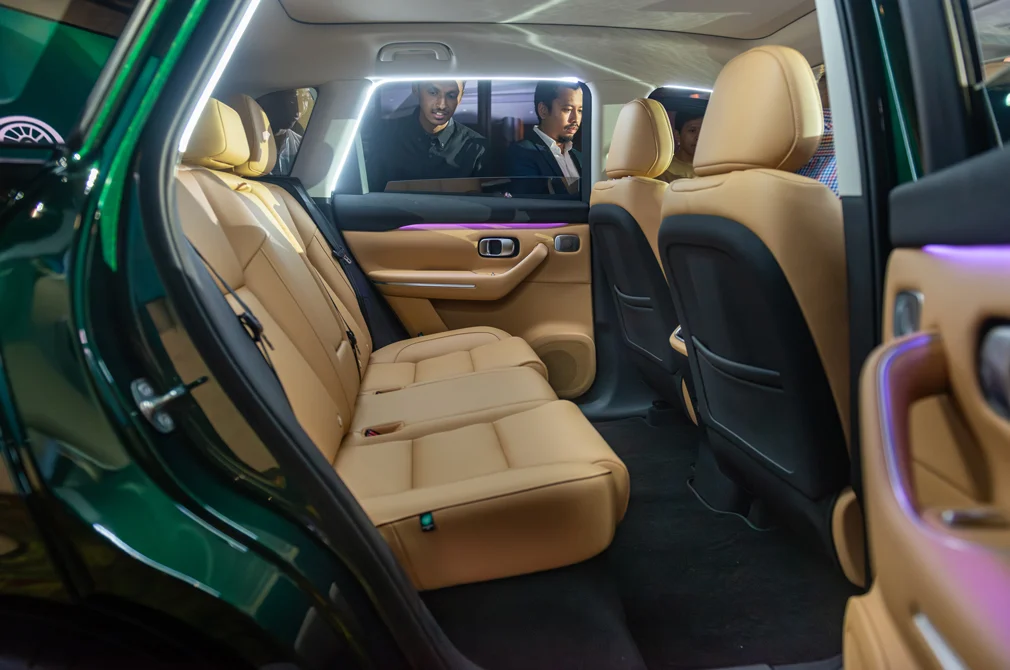
The Leapmotor C10 is packed with equipment typically found in more premium models. Standard features include:
-
Ventilated and heated front seats for year-round comfort
-
Dual-zone climate control allowing separate temperature settings
-
An 840-watt, 12-speaker audio system that delivers clear, immersive sound
-
Ambient lighting to set a relaxing cabin mood
-
A connected car mobile app that lets owners remotely monitor vehicle status, lock/unlock doors, and control specific functions
For everyday practicality, the C10 provides generous storage solutions. The 435-litre rear boot is suitable for family luggage, groceries, or bulky items, while the 32-litre frunk offers additional space for small bags, charging cables, and travel necessities.
Health-Conscious Cabin Materials
One distinctive highlight of the C10 is its upholstery. The seats are wrapped in OEKO-TEK Standard 100–certified fabric, meaning every element — from the threads to the buttons — is tested and confirmed free from harmful substances. This certification is especially reassuring for families with children, individuals with sensitive skin, or buyers who prioritise a non-toxic, eco-conscious interior.
High Safety Standards and Solid Engineering
Safety remains a major focus for Leapmotor. The C10 comes equipped with:
-
Seven airbags
-
A 360-degree Panoramic Camera with Transparent Chassis View
-
LEAP Pilot, a suite of 17 advanced driver assistance features, including lane keeping, adaptive cruise control, forward collision warning, and more
Structurally, the vehicle offers impressive rigidity. With a torsional rigidity rating of 42,500Nm/degree, the C10 sits in the same performance bracket as some luxury SUVs known for solid build quality. Leapmotor also uses 2,000MPa nuclear submarine–grade thermoformed steel for the door side-impact crossbeams — a material typically found in high-end automotive manufacturing — to improve crash protection.
Performance, Efficiency, and Range
Powering the C10 is a 100kW (134hp) electric motor that produces 320Nm of torque. This allows the SUV to accelerate from 0 to 100km/h in 10.7 seconds, which is suitable for daily urban and expressway driving.
In terms of efficiency, Leapmotor reports an average consumption of 5.3km/kWh. The C10 has a combined driving range of 419km, making it practical for regular commuting without frequent charging. For city-focused drivers, the brand claims an even higher range of 565km, thanks to regenerative braking and slower-speed conditions that are favourable for EV performance.
Backed by Cycle & Carriage
Leapmotor’s entry into Singapore is supported by Cycle & Carriage, one of the country’s most established automotive distributors. Already representing Stellantis brands such as Citroën and Peugeot, as well as Chinese EV brands like Maxus and ORA, Cycle & Carriage’s involvement reinforces Leapmotor’s long-term commitment to the local market.
Its established service network, local customer support, and reputation provide potential customers with greater confidence as they consider adopting the C10.
A Strong New Contender in the EV Market
With its blend of technology, practicality, and value, the Leapmotor C10 arrives as a compelling option for Singaporean EV shoppers. Its combination of Cat A eligibility, premium features, strong safety credentials, and competitive pricing positions it well against both established and emerging rivals.
As Leapmotor begins its journey in Singapore, the C10 represents a promising start that will likely draw attention from families, tech-savvy drivers, and value-conscious buyers alike.
]]>Both schemes have been extended, but with revised rebates and surcharges that will significantly impact the cost of owning a new car from 2026 onwards. Here is a breakdown of what to expect if you are planning to buy an EV or any cleaner-energy vehicle in the next few years.
What Is the Vehicular Emissions Scheme (VES)?
Introduced in 2018, the VES encourages car buyers to opt for vehicles with lower emissions. Under the scheme, new vehicles are placed into different emission bands based on pollutants such as carbon dioxide, hydrocarbons, nitrogen oxides, carbon monoxide, and particulate matter.
Depending on the band, buyers either receive rebates on their Additional Registration Fee (ARF) or pay a surcharge. The ARF is a tax on all newly registered vehicles, calculated as a percentage of the car’s open market value (OMV).
The revised VES, which will run until December 31, 2027, will see several changes.
-
Only EVs will qualify for rebates. Hybrid vehicles will no longer be eligible.
-
Higher surcharges for pollutive cars. More polluting vehicles will move into stricter categories with surcharges ranging between S$15,000 and S$45,000.
-
Band adjustments. Cars currently in Band A2 will be reclassified into Band B, meaning they will lose their rebates. For example, the Honda Jazz, currently eligible for a S$2,500 rebate, will lose that benefit in 2026. Larger vehicles like the Toyota Alphard will see even higher penalties, with surcharges rising from S$7,500 in 2026 to S$15,000 in 2027.
The Electric Vehicle Early Adoption Incentive (EEAI)
Launched in 2021, the EEAI was designed to boost the adoption of electric cars and taxis by offering a 45 percent rebate on ARF, capped at S$15,000.
The scheme has been extended until December 31, 2026, but with a major change:
-
From January 1, 2026, the maximum rebate will be reduced to S$7,500.
-
After 2026, the incentive will be phased out entirely.
How Much Can EV Buyers Save?
With both schemes combined, EV buyers can expect the following savings:
-
Up to S$30,000 in rebates in 2026
-
Up to S$20,000 in rebates in 2027
For instance, a BYD Atto 3 with an OMV of S$31,500 and an ARF of S$36,100 will cost S$6,100 after rebates in 2026, compared to today’s cost of S$0 ARF.
Similarly, a base-level Tesla Model 3, with an OMV of S$44,847 and an ARF of S$57,210, will cost S$27,210 in ARF from 2026. This is S$10,000 more than current prices, as rebates are scaled back.
Why Are Incentives Being Cut?
According to LTA and NEA, the revisions reflect the shrinking cost gap between EVs and traditional internal combustion engine vehicles. From January to August 2025, 80 percent of new cars and taxis registered were cleaner-energy models, with half being EVs.
The agencies emphasized that incentives will gradually reduce as Singapore moves towards its goal of 100 percent cleaner-energy vehicles by 2040 and net-zero emissions by 2050.
Impact on Car Prices and COE Premiums
One concern for buyers is how these changes may affect Certificate of Entitlement (COE) premiums. Analysts suggest that the uncertainty over rebates has already contributed to recent surges in COE prices, with smaller car COEs hitting a record S$107,889 earlier this month.
However, transport economist Walter Theseira believes that the eventual increase in COE supply towards the end of the decade could drive prices down, potentially offsetting the loss of rebates.
He noted that many best-selling Chinese EV models will not be significantly affected by the rebate changes, as their ARF is often below S$30,000. In such cases, rebates cannot reduce the ARF below S$0, meaning buyers do not lose the full advertised rebate amount.
This could mean that for some buyers, waiting rather than rushing to buy before 2026 may actually make more financial sense.
Should You Buy Now or Wait?
If you are planning to buy an EV, timing is everything. Here are the key considerations:
-
Buyers of premium EVs like Tesla may face higher costs from 2026, as rebates shrink.
-
Those looking at entry-level EVs from Chinese brands may be less affected, as rebates already max out against their lower ARF values.
-
With COE supply set to increase, prices may fall in the coming years, potentially balancing out the reduced rebates.
Conclusion
Singapore’s EV landscape is evolving, and while rebates are shrinking, the government’s long-term vision is clear: accelerating the shift towards clean energy vehicles while gradually reducing subsidies.
For buyers, the choice comes down to individual needs and timing. If you need a car immediately, securing rebates before they are reduced could save you thousands. However, if you can wait, falling COE premiums and stable EV prices may offset the rebate cuts.
Either way, the future of driving in Singapore is undoubtedly electric.
]]>